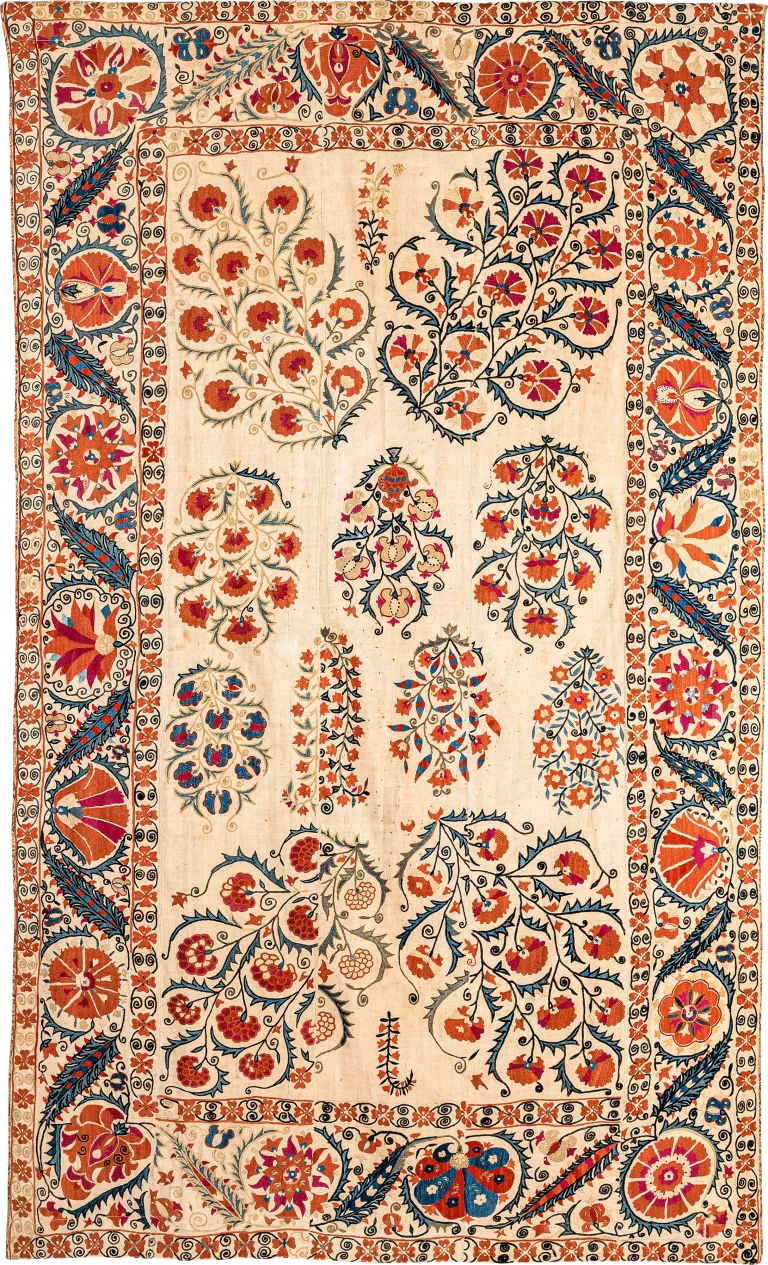
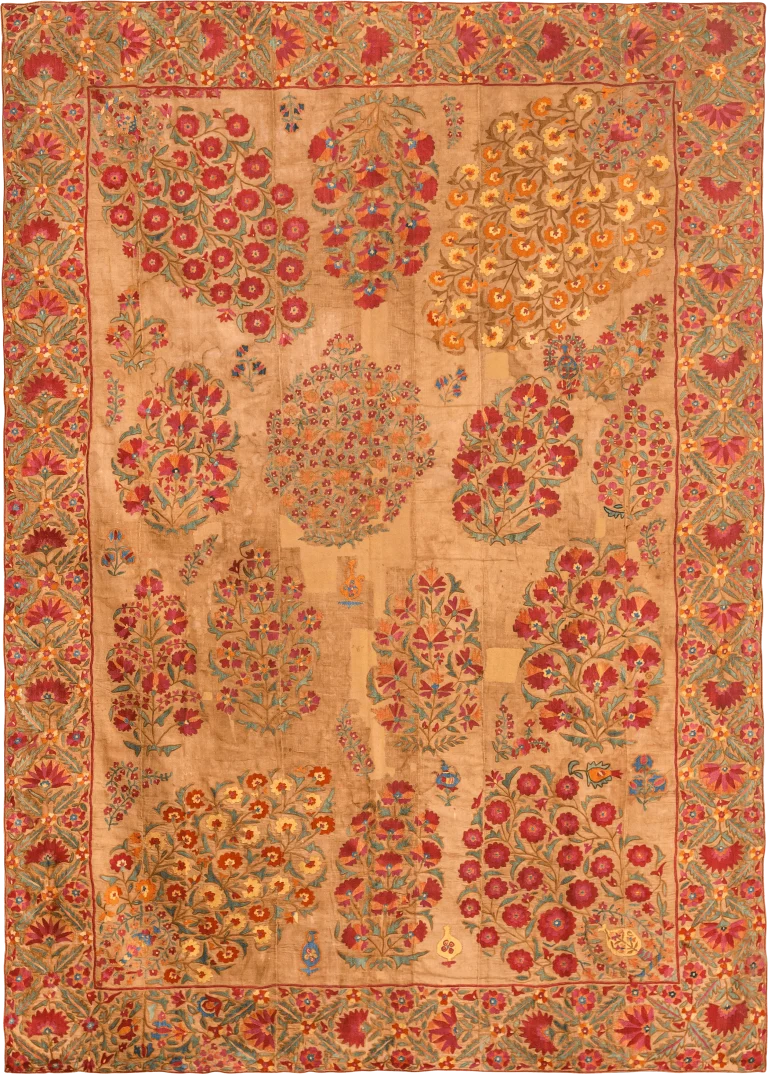
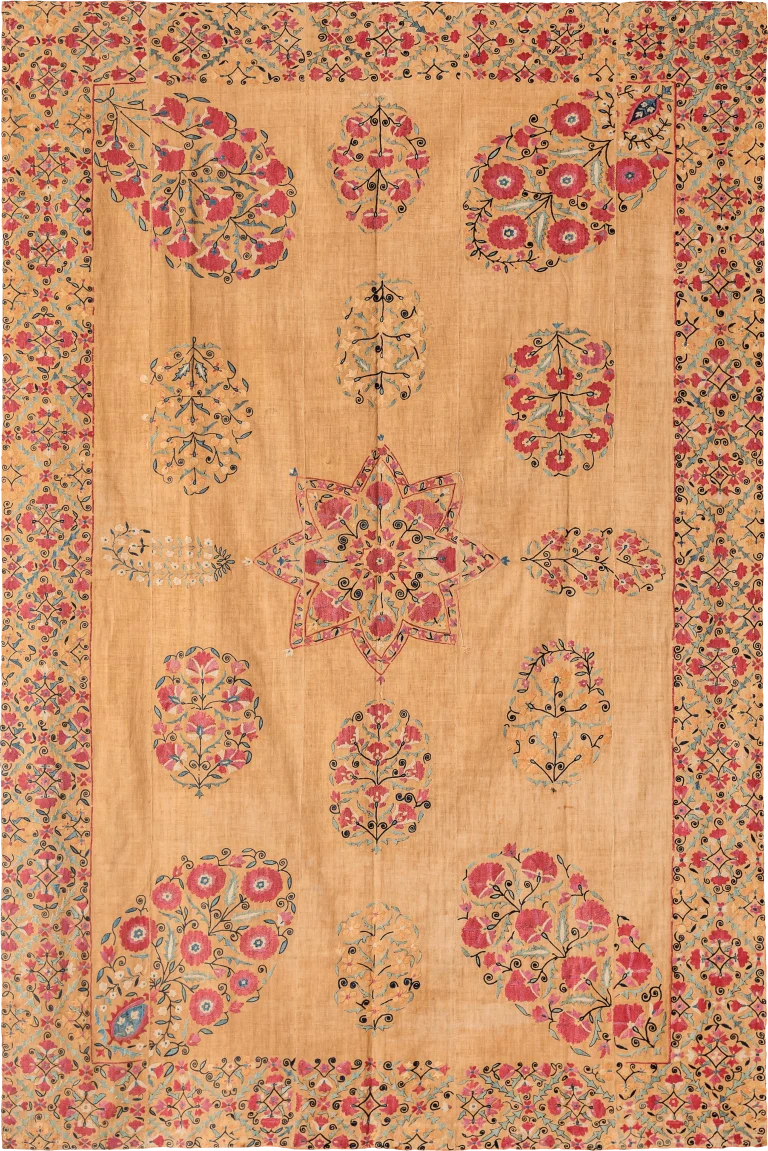
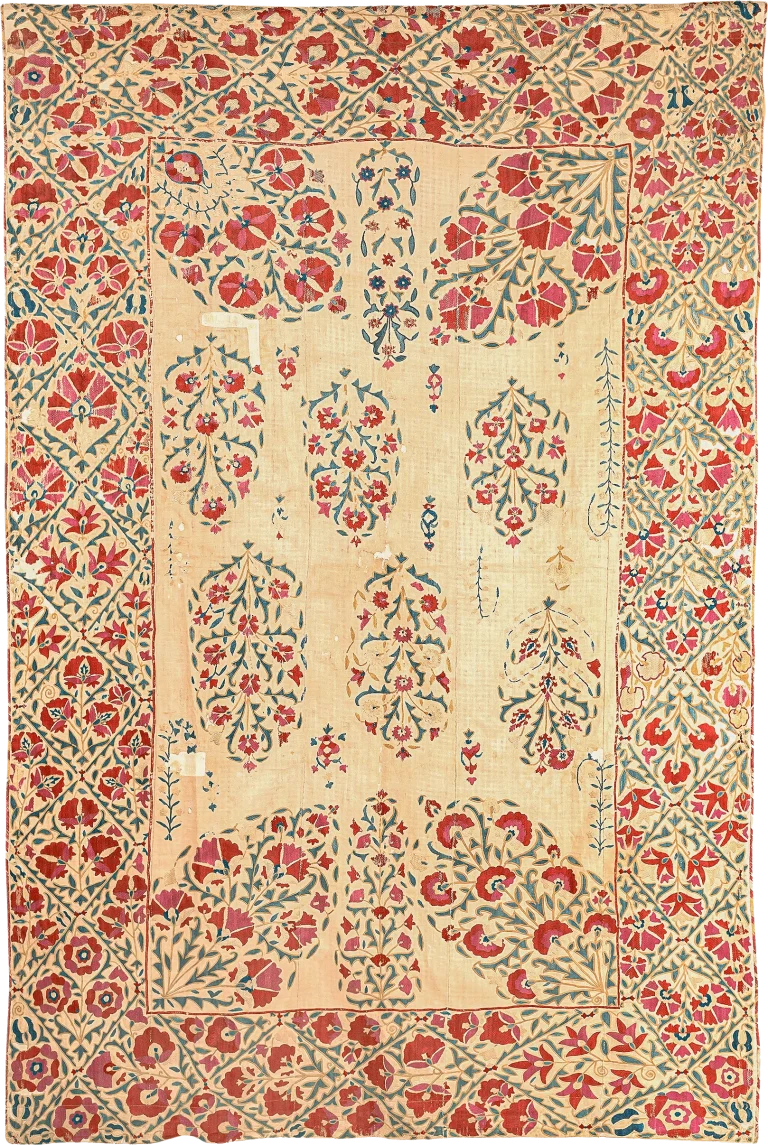
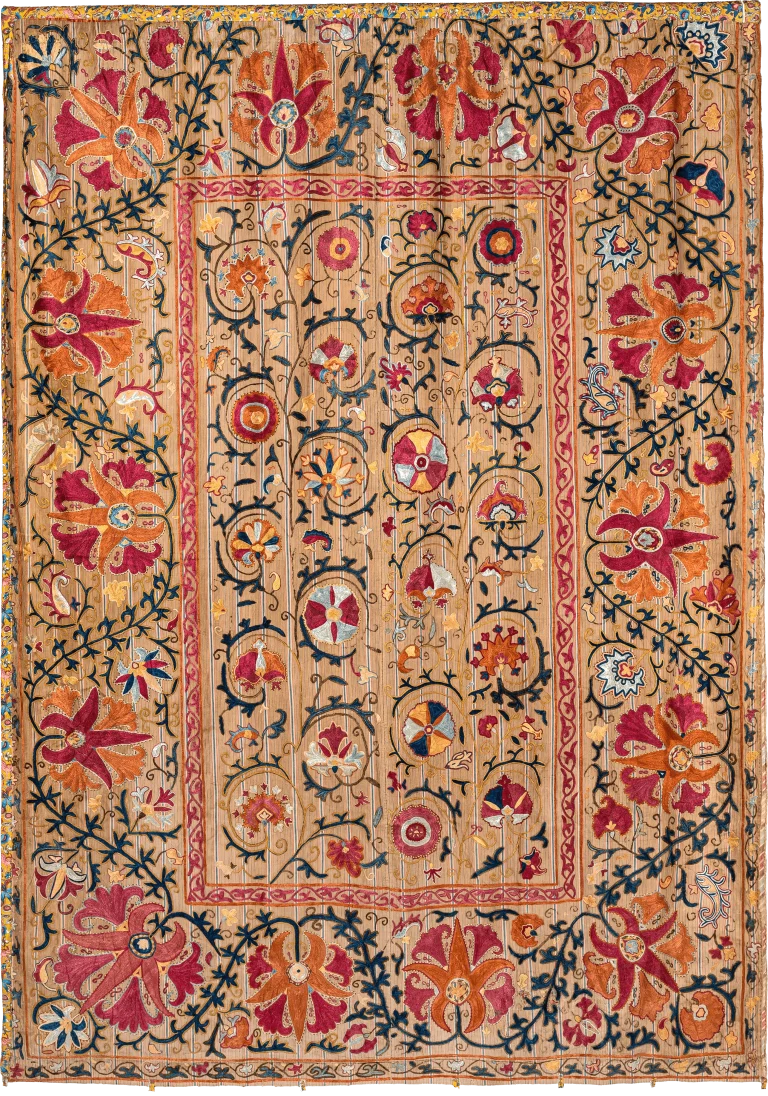
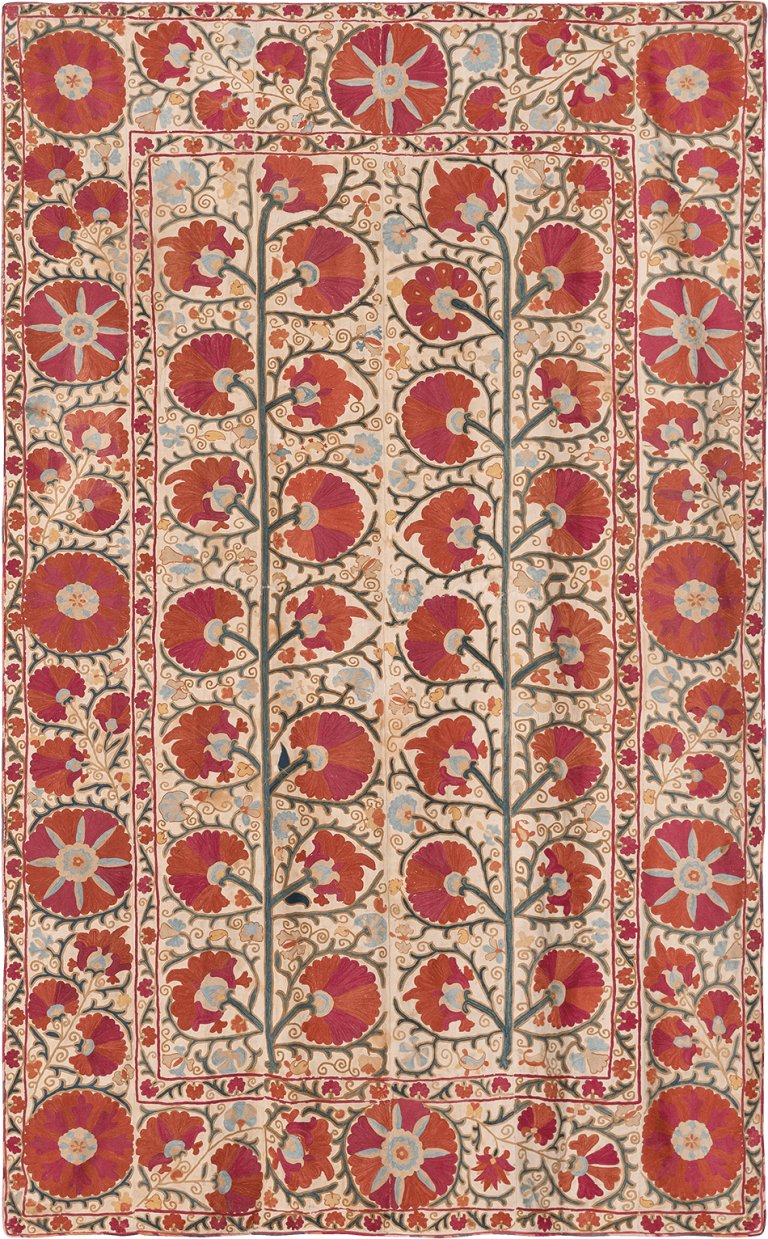
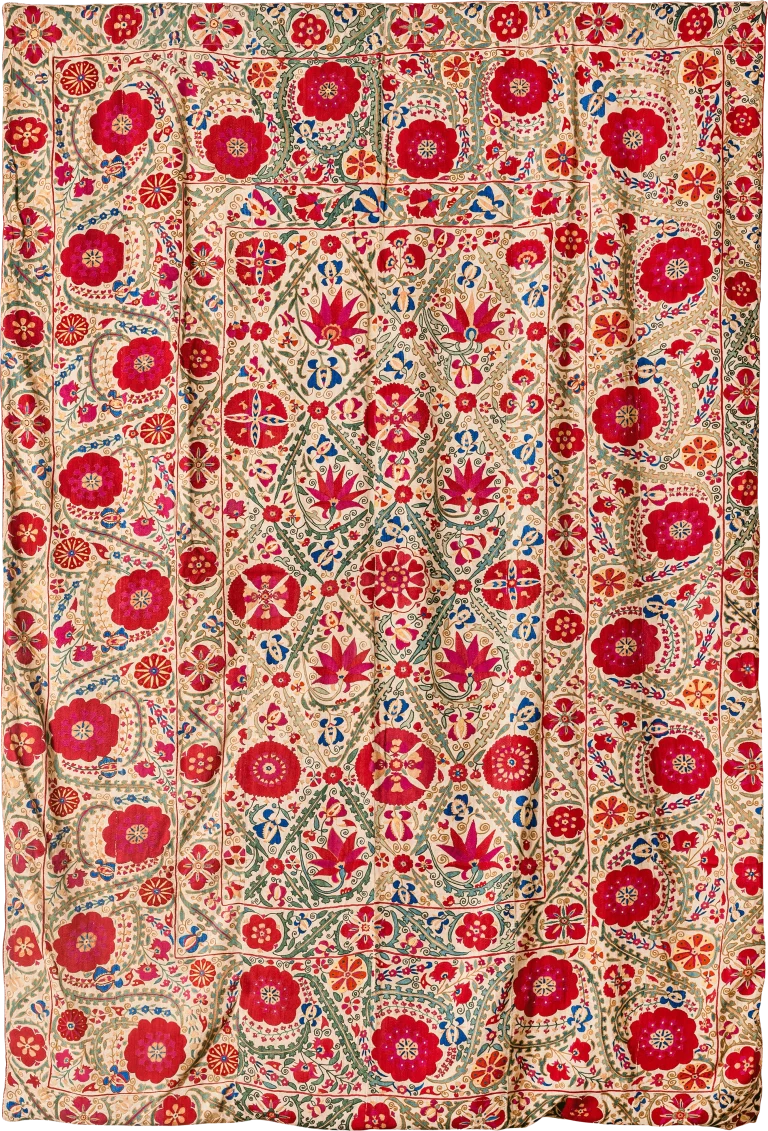
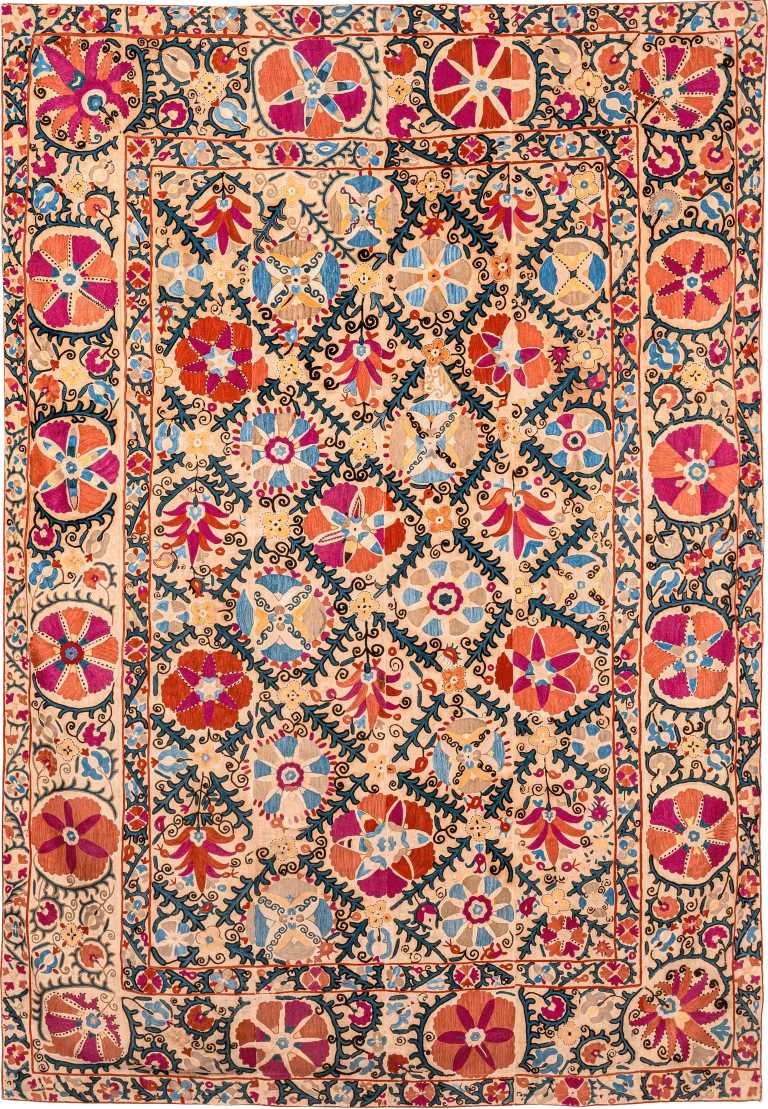
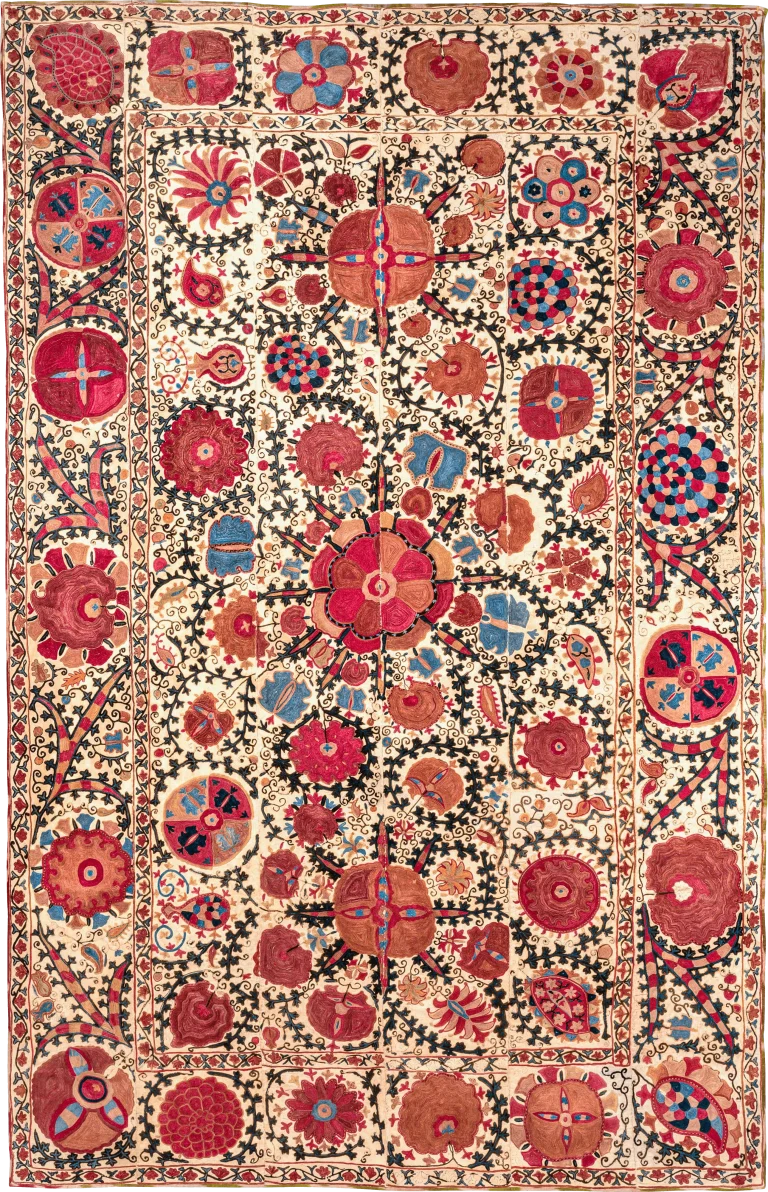
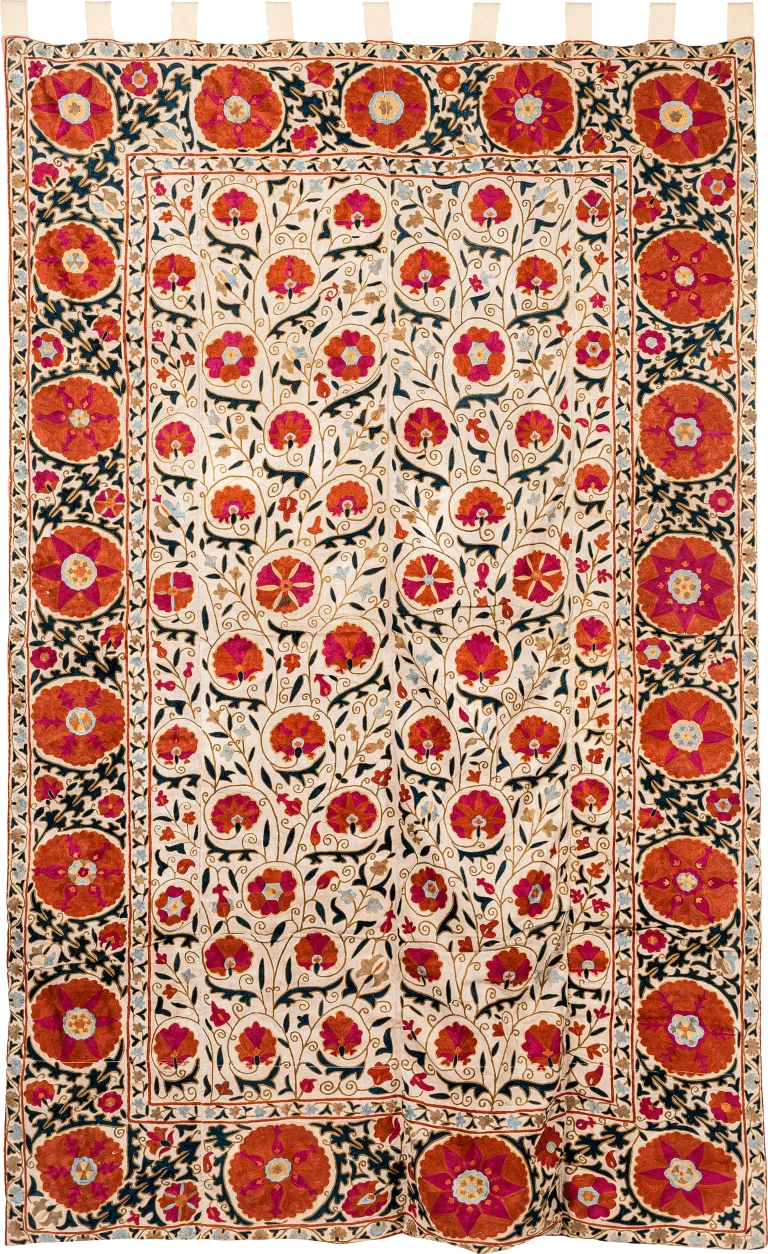
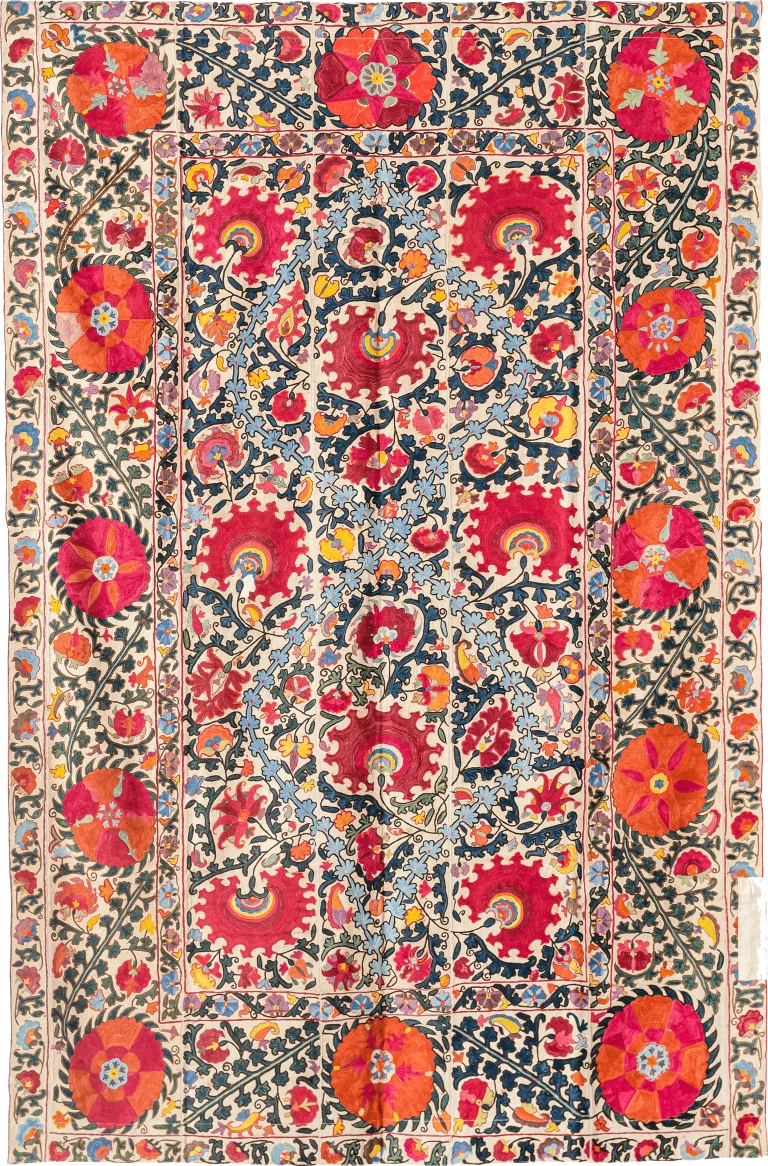
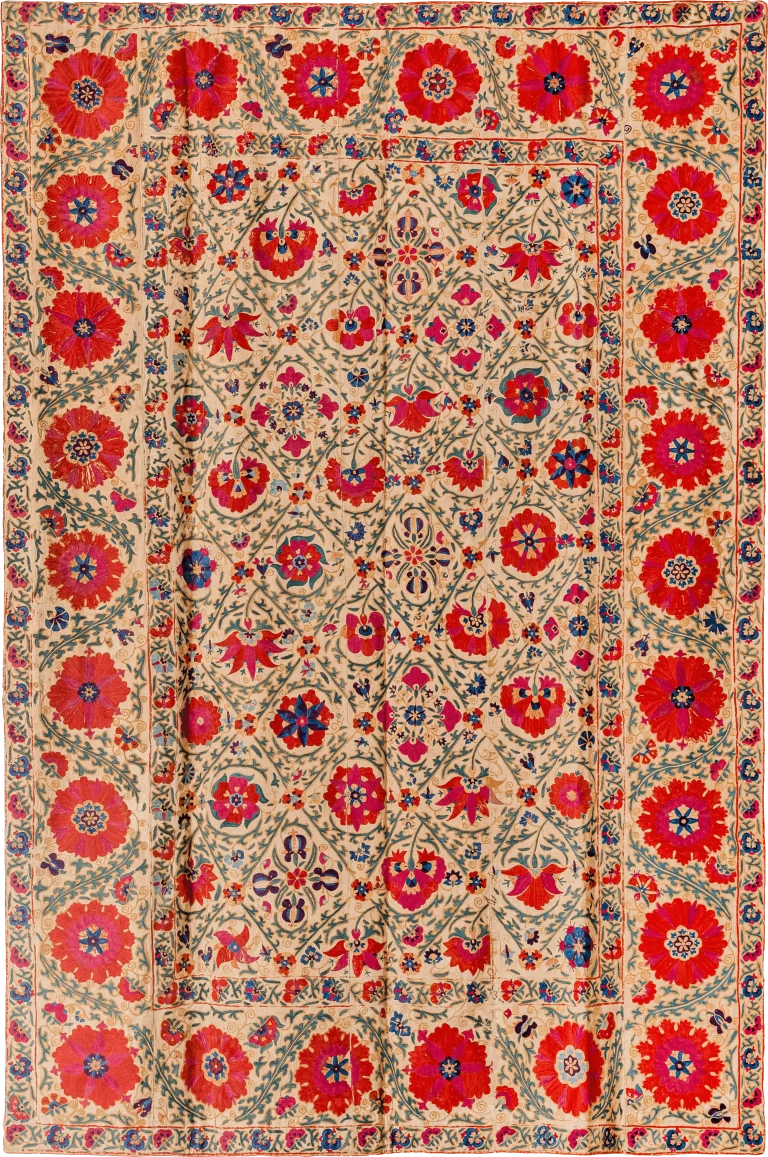
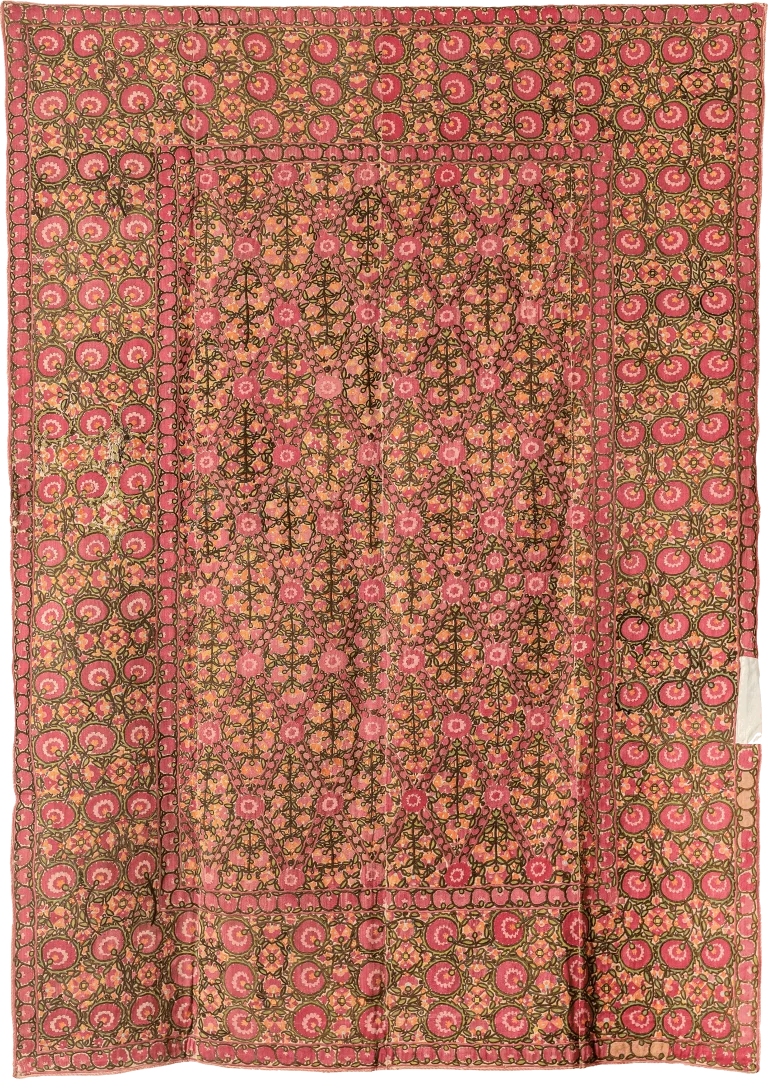
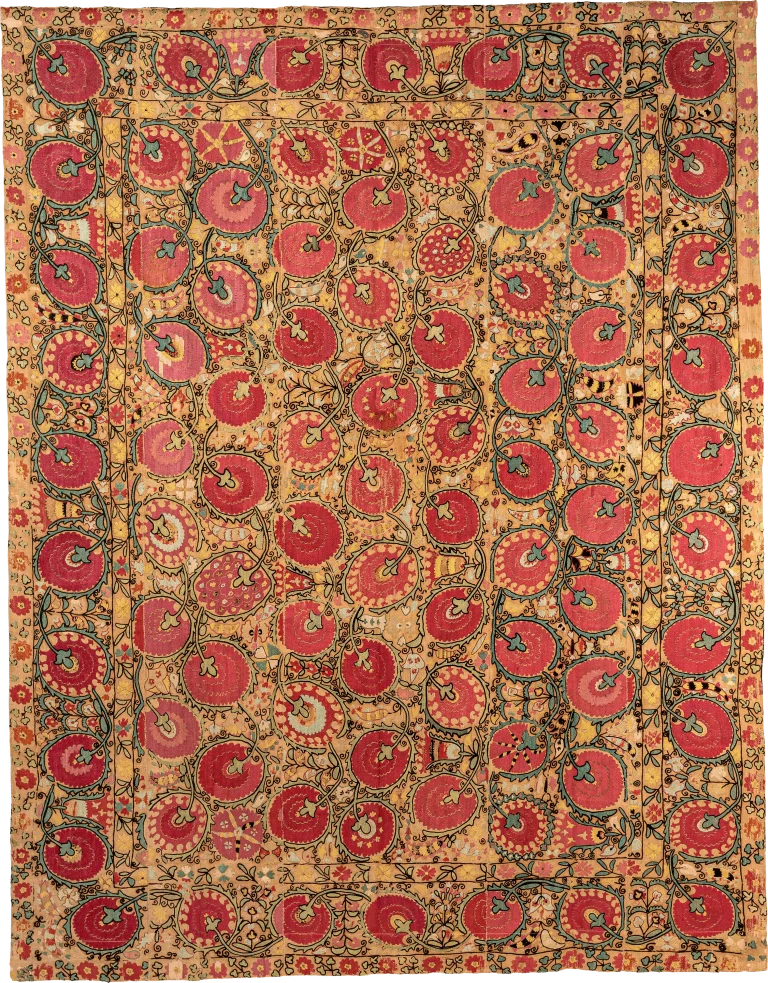
Suzani (Tajik for “needle-crafted”) embroideries are unique in design and technique to Central Asia, and particularly to the Uzbek and Tajik communities. They were made as wall hangings or bed coverings to be presented as dowry at the time of marriage. Work on them might begin at a girl’s birth by her extended family, and take years to complete. The older surviving pieces date from the late 18th century through to the 19th, the period in which the art of suzani, ikat and carpet-weaving reached its height. This reflected the wealth of the most prosperous families who benefited from the economic revival of the time, and inherited the diverse culture of the Silk Route – thus drawing inspiration in design from India, China, Iran and the Ottoman Empire.
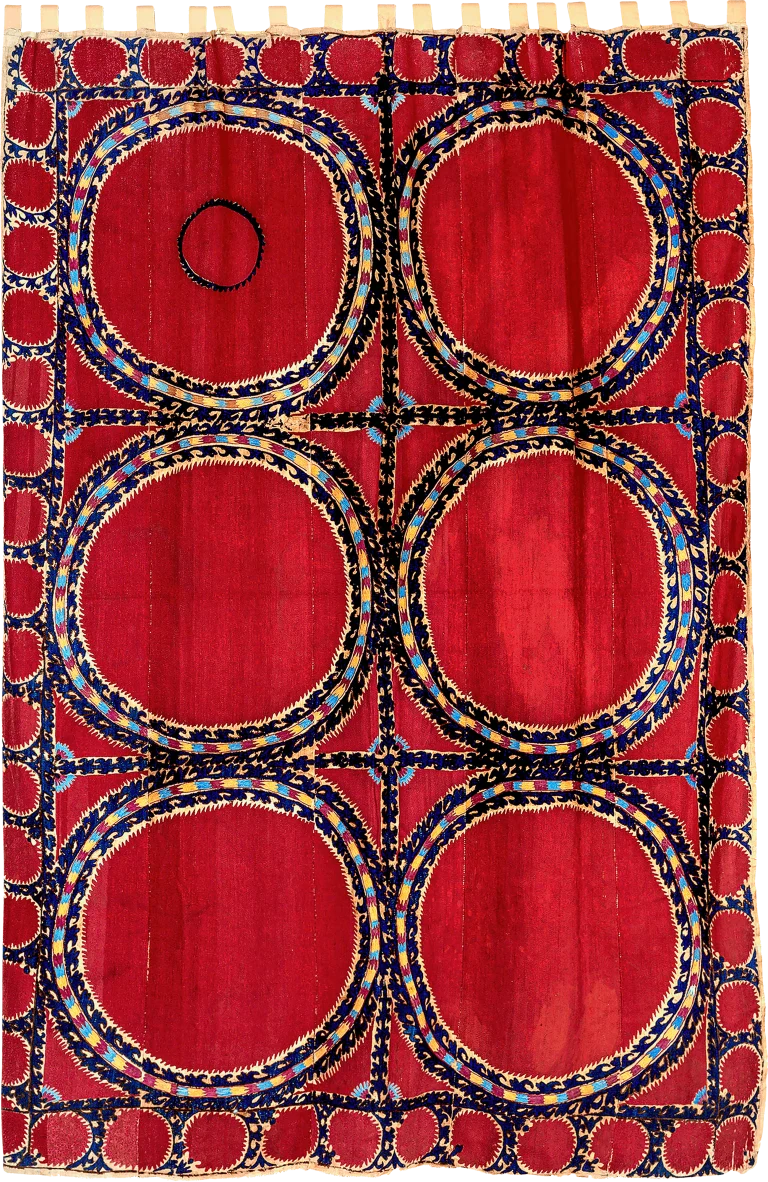
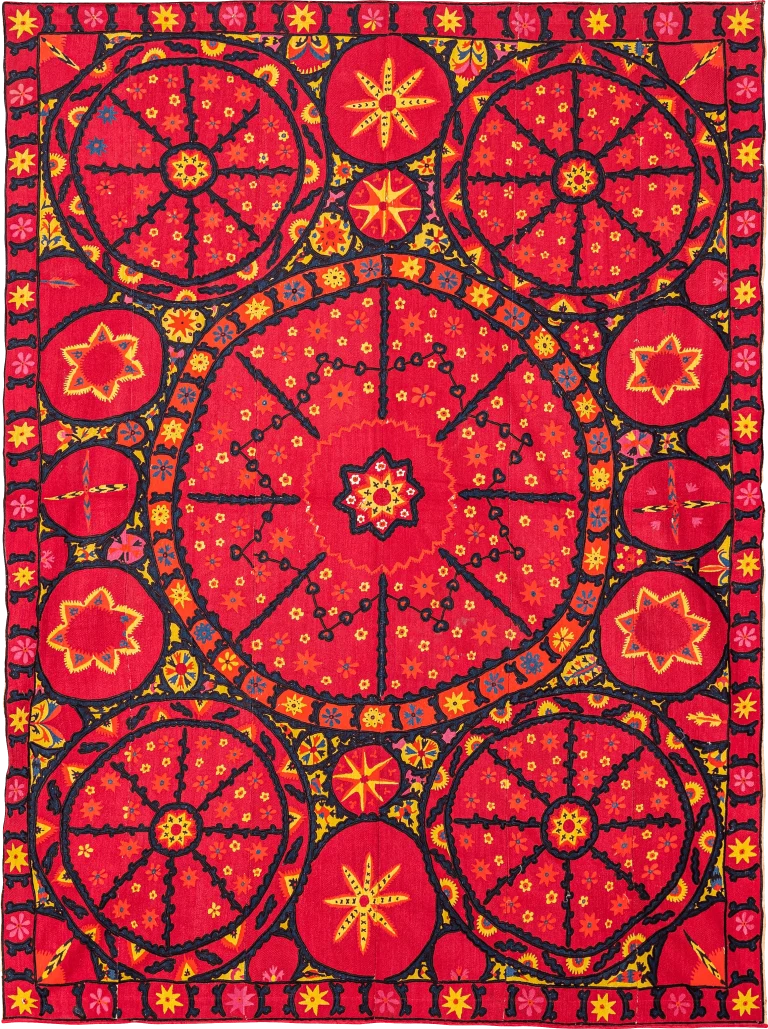
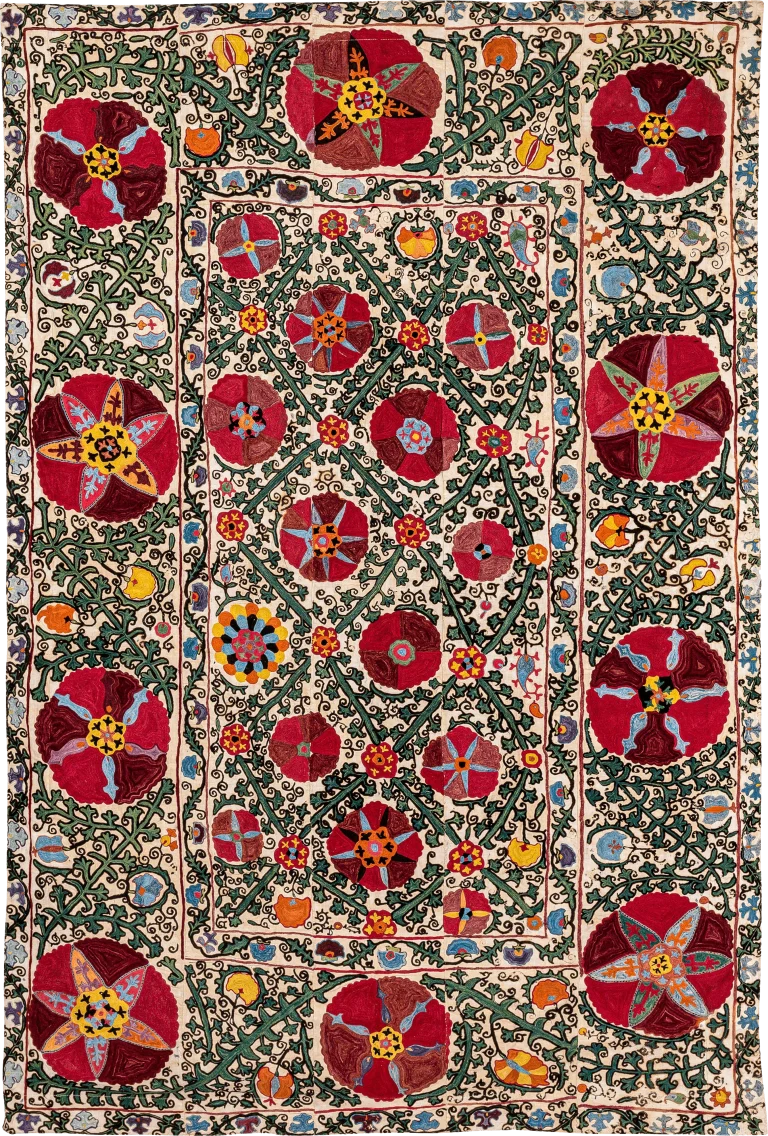
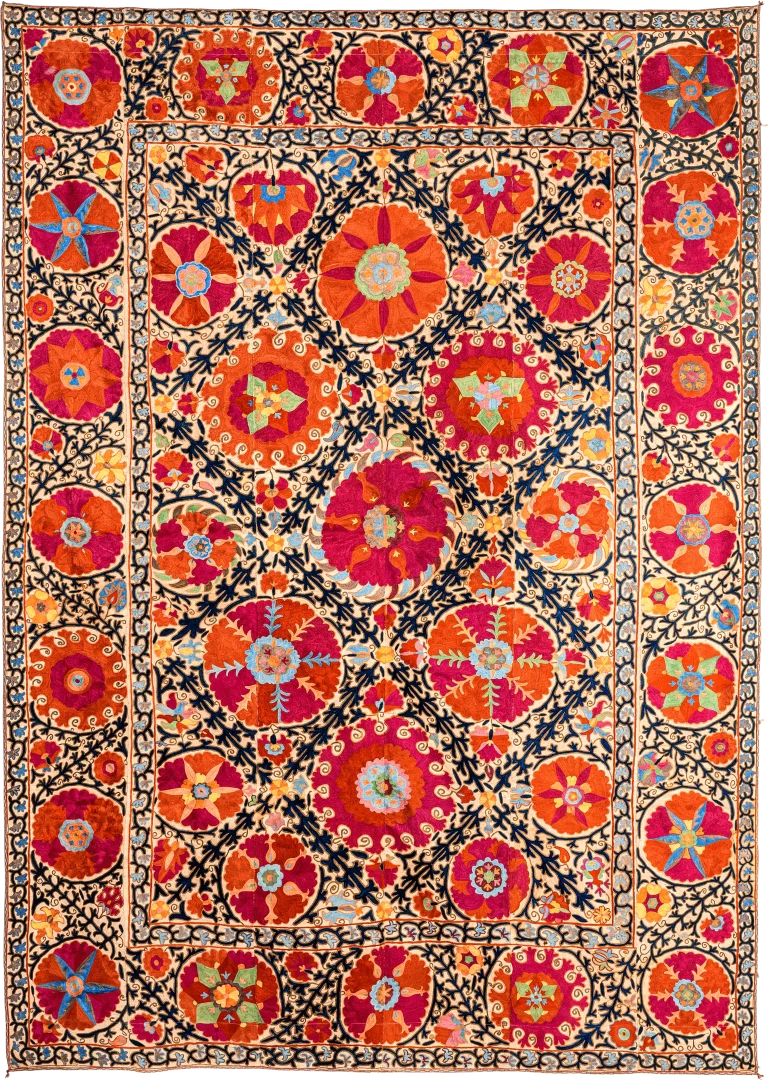
Most suzani were embroidered in silk thread on cotton fabric – though some more luxurious were silk on silk. Different areas developed a different visual language so that of Bukhara is different from those of Nurata, Shakhrisabz, Tashkent, the Ferghana valley and Kokand within it. Tashkent suzanis, with their bold red cosmic circles representing the moon (oy), function as sophisticated abstract compositions drawing on archaic symbolism from pre-Islamic times when Uzbeks worshiped the sun, moon and stars.
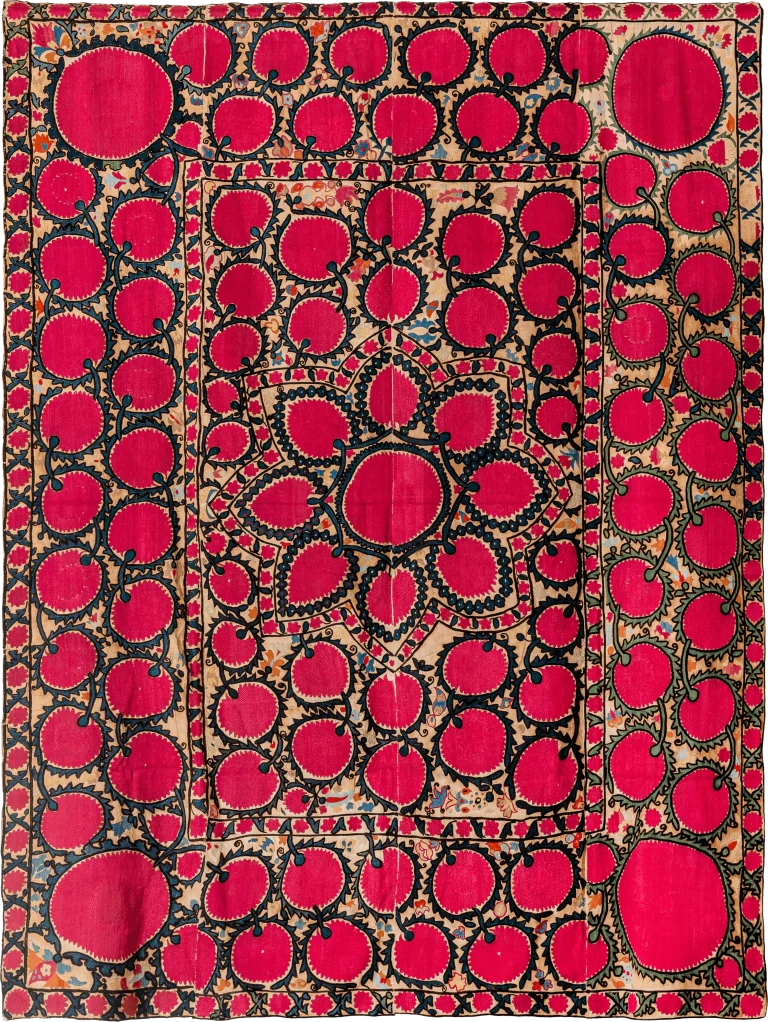
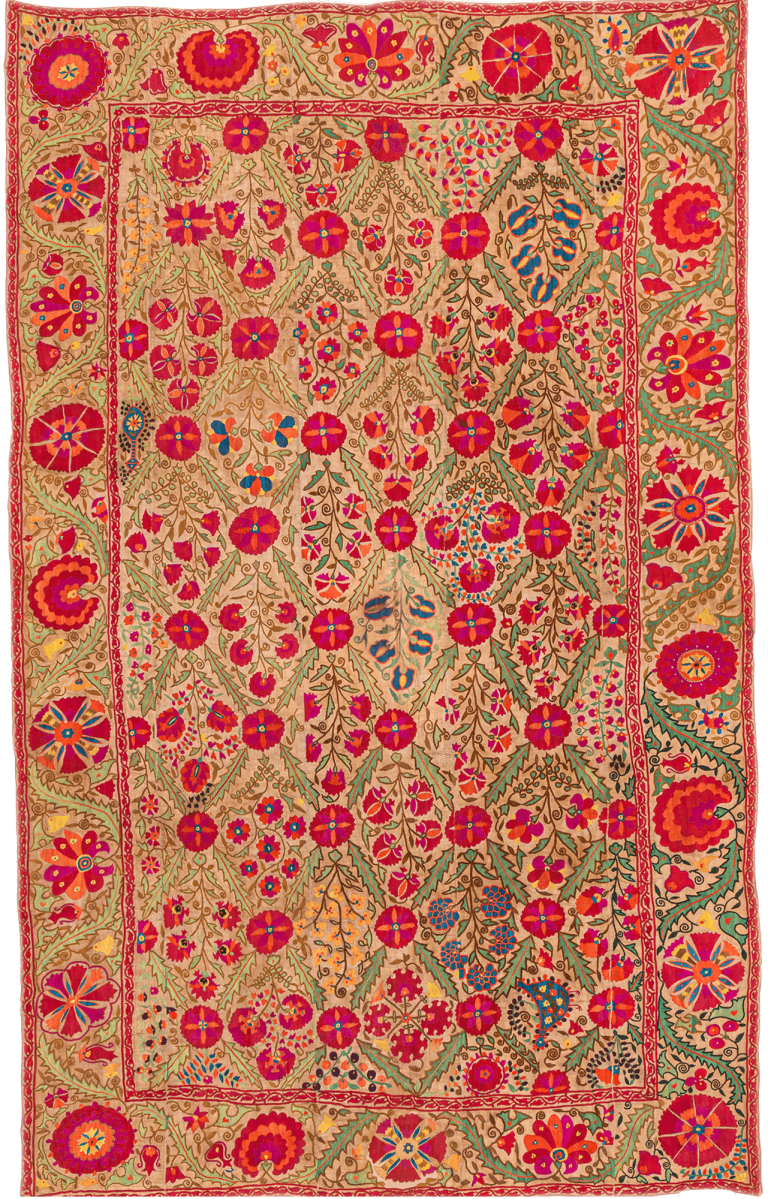
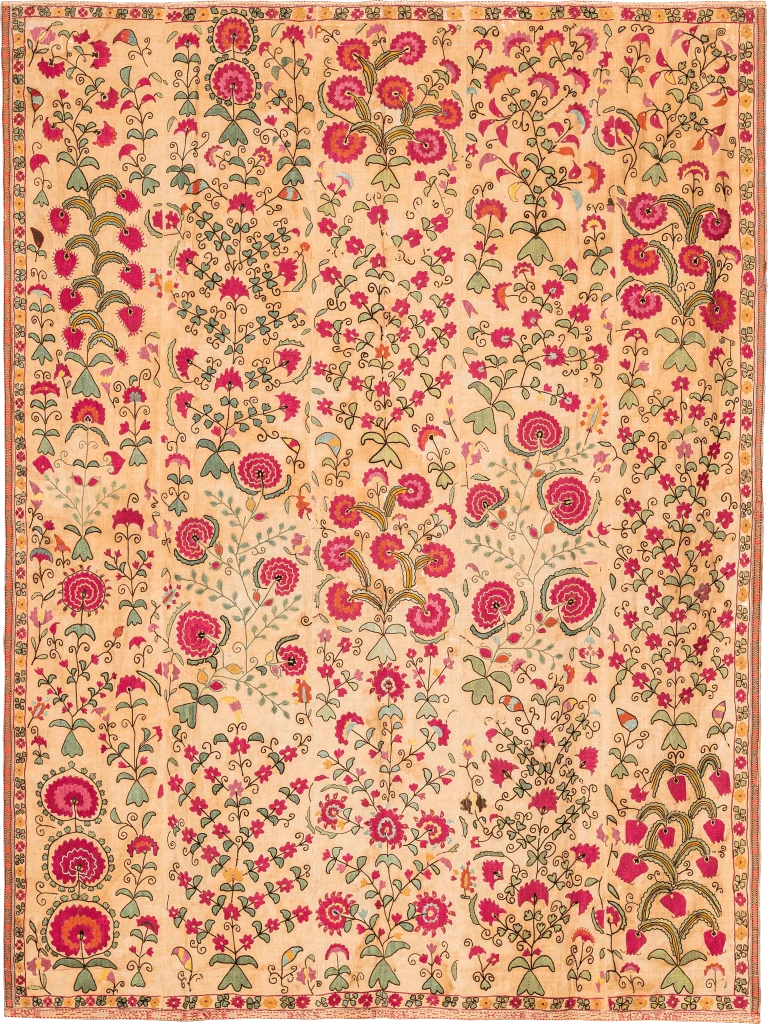
Works from Nurata near Bukhara feature delicate corner bouquets and polychrome stems that recall Persian or Mughal gardens and the boteh patterns of Kashmir shawls. The nodding flower design, recalling Indian poppies, characterized the Ferghana Valley. The embroideries of Bukhara draw on both pomegranate motifs and a dazzling combination of flowers including carnations, irises, and tulips, supported by sprigs of green foliage. Rosettes on the borders, in the form of a blossoming flower, were seen as a symbol of the sun or moon and as communicating a cosmic force.
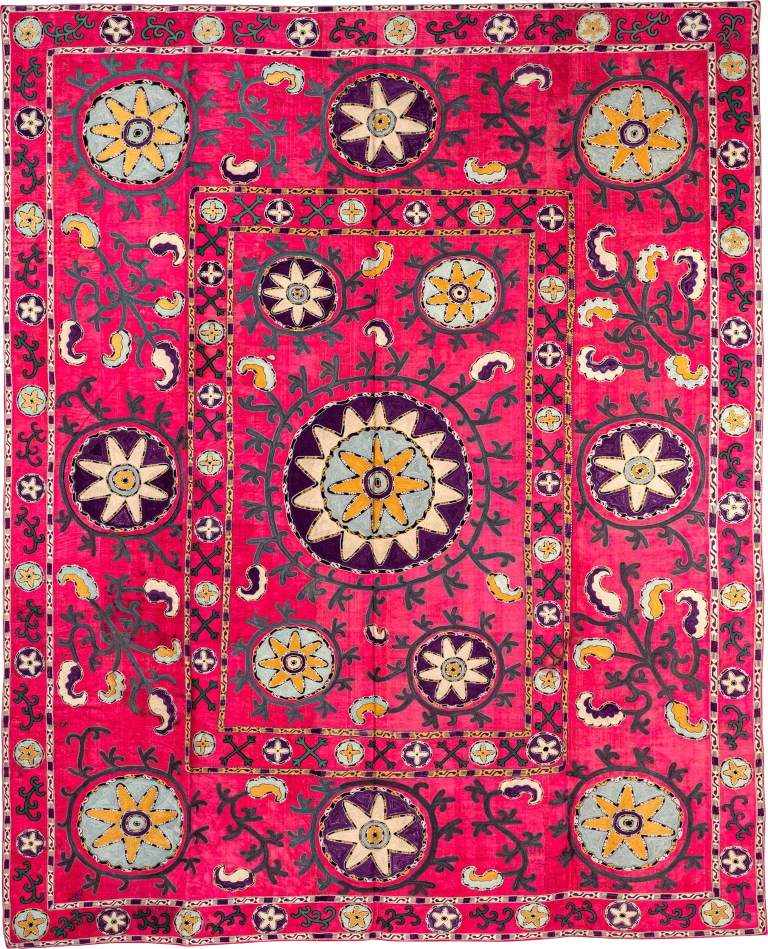
Suzani were normally embroidered in strips and then joined together when finished. A combination of embroidery stitches were used – from satin stitch to couching, buttonhole and chain stitch – to give varying effects and carrying varied symbolic meanings. Hangings were often backed by much less expensive printed cotton fabric from Russia. It was of no importance that the design of each strip did not totally match with the one beside it. Defects were excused as not competing with the perfection of God.
This sophisticated textile tradition emerged from Central Asia’s position along Silk Roads that interconnected European, Turkish, Chinese, and Muslim cultures. Islam arrived in the 8th century, and over time splendid cities arose where women decorated every possible textile with embroidery and appliqué as their principal means of artistic expression and embellishment.