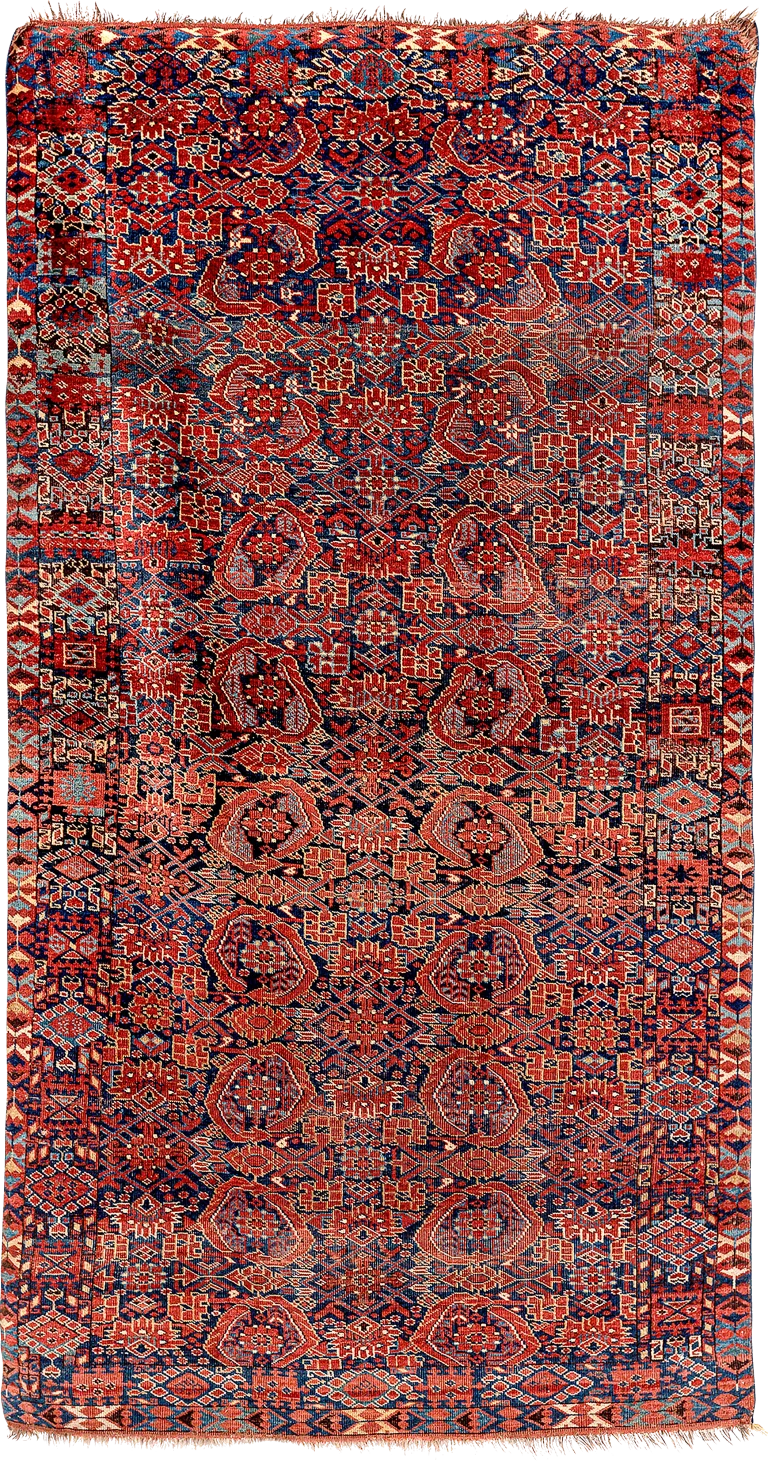
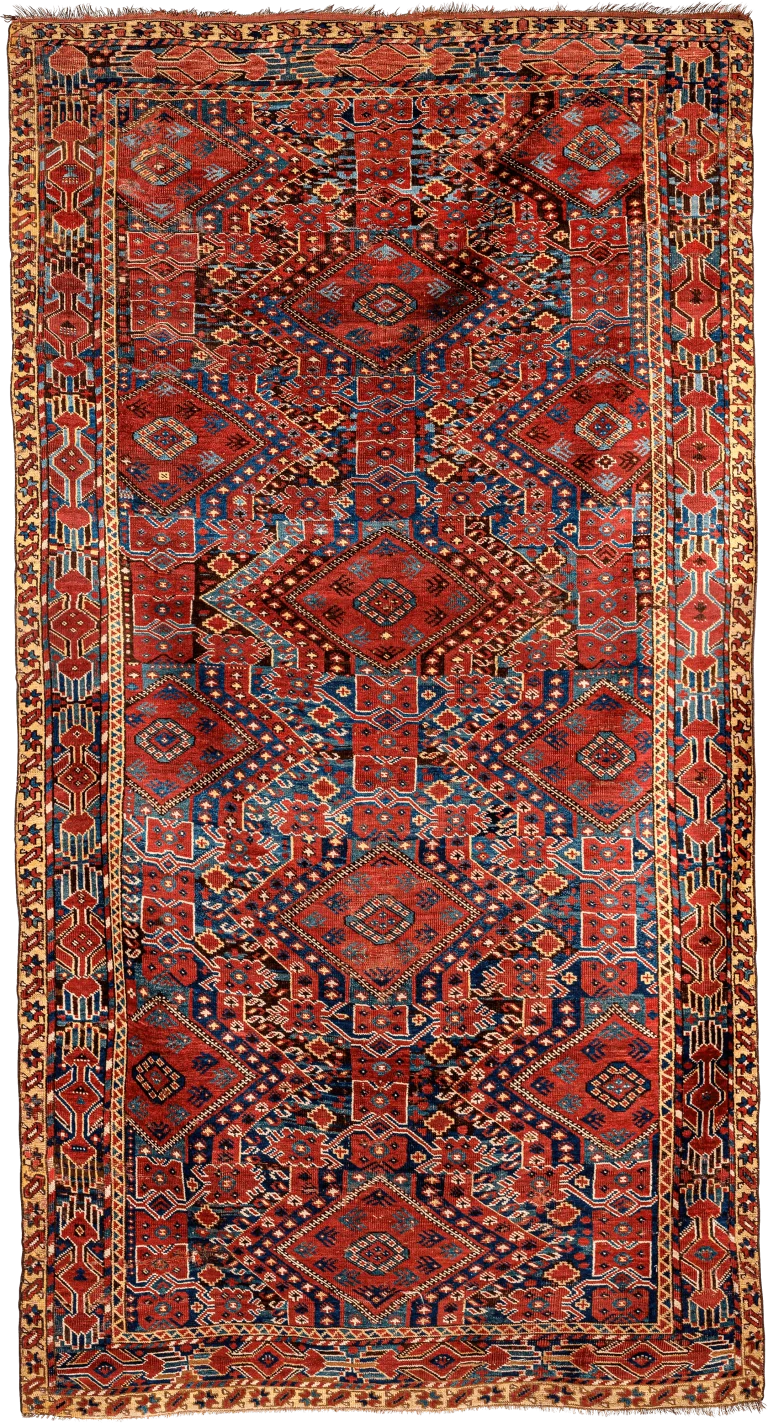
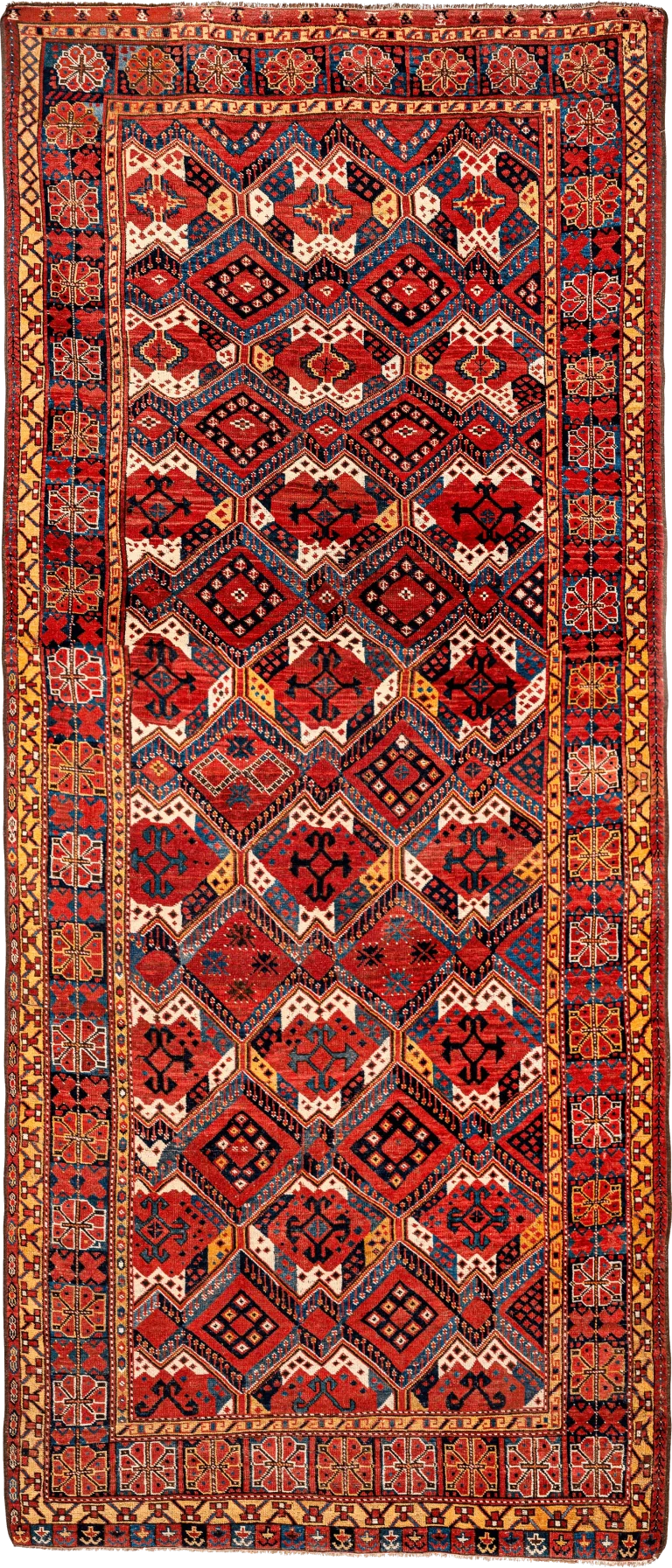
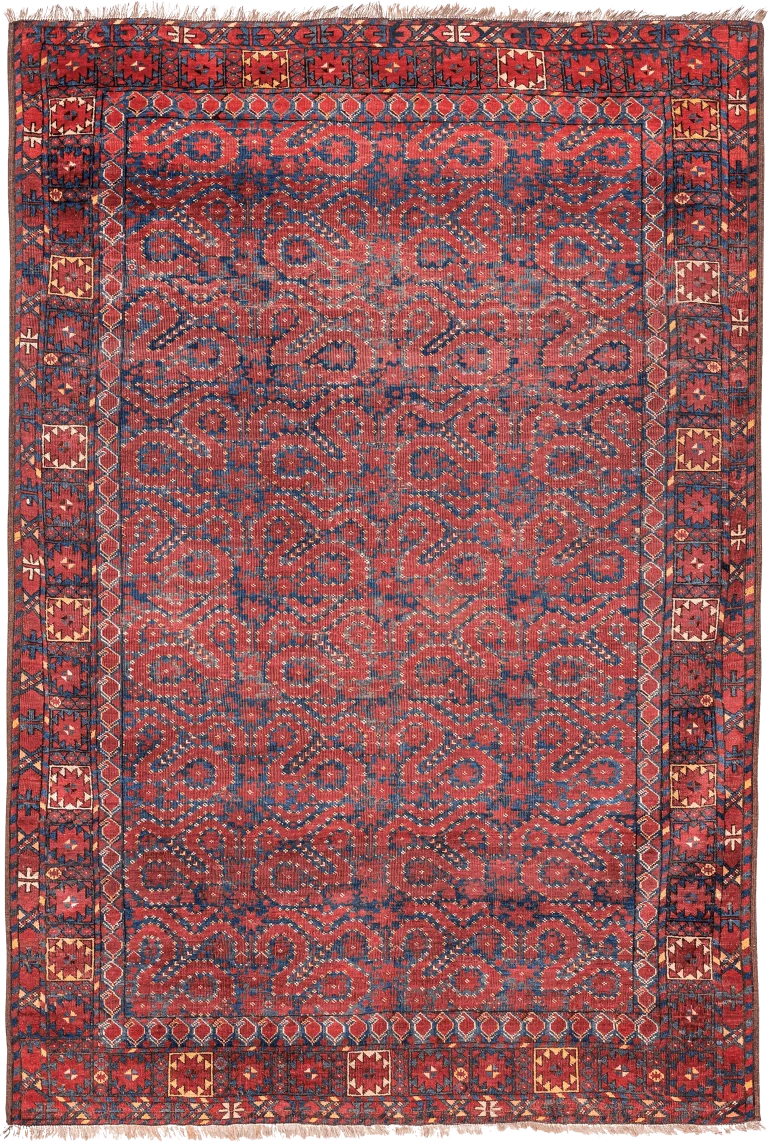
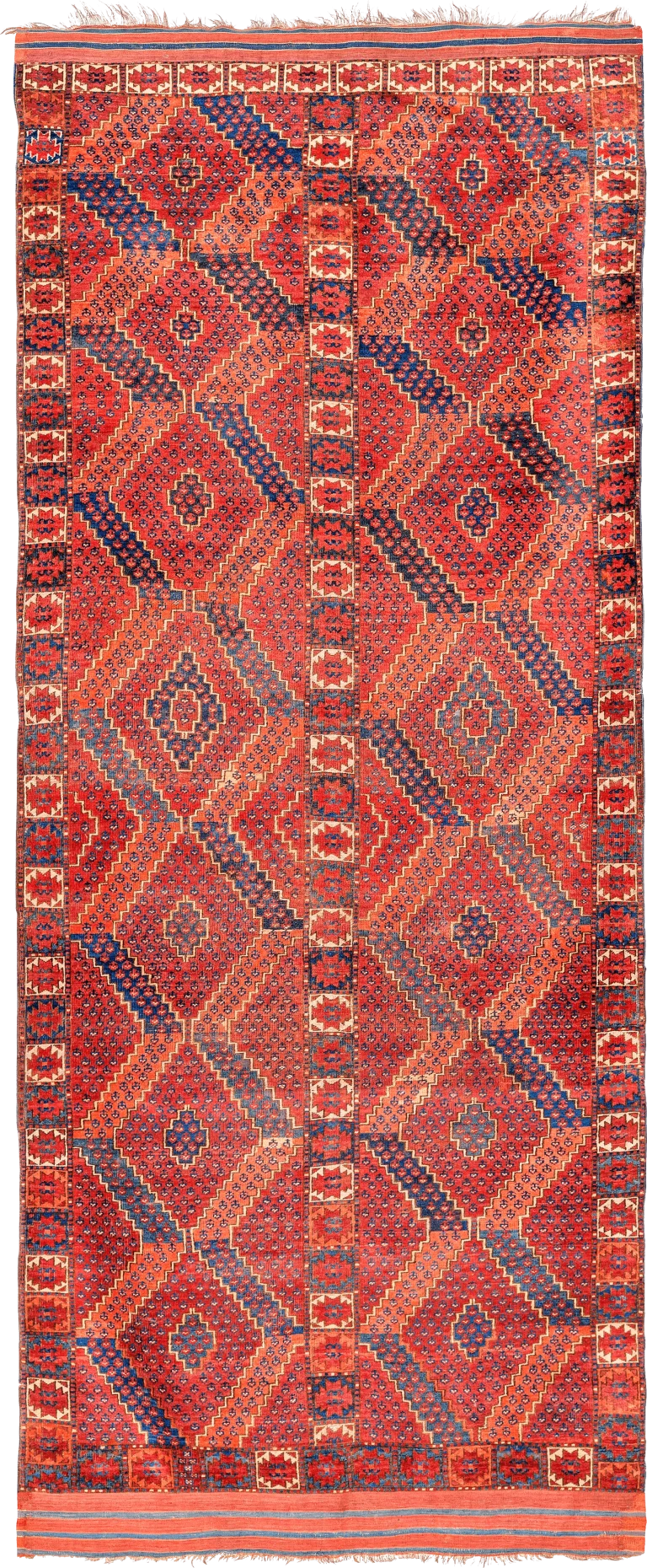
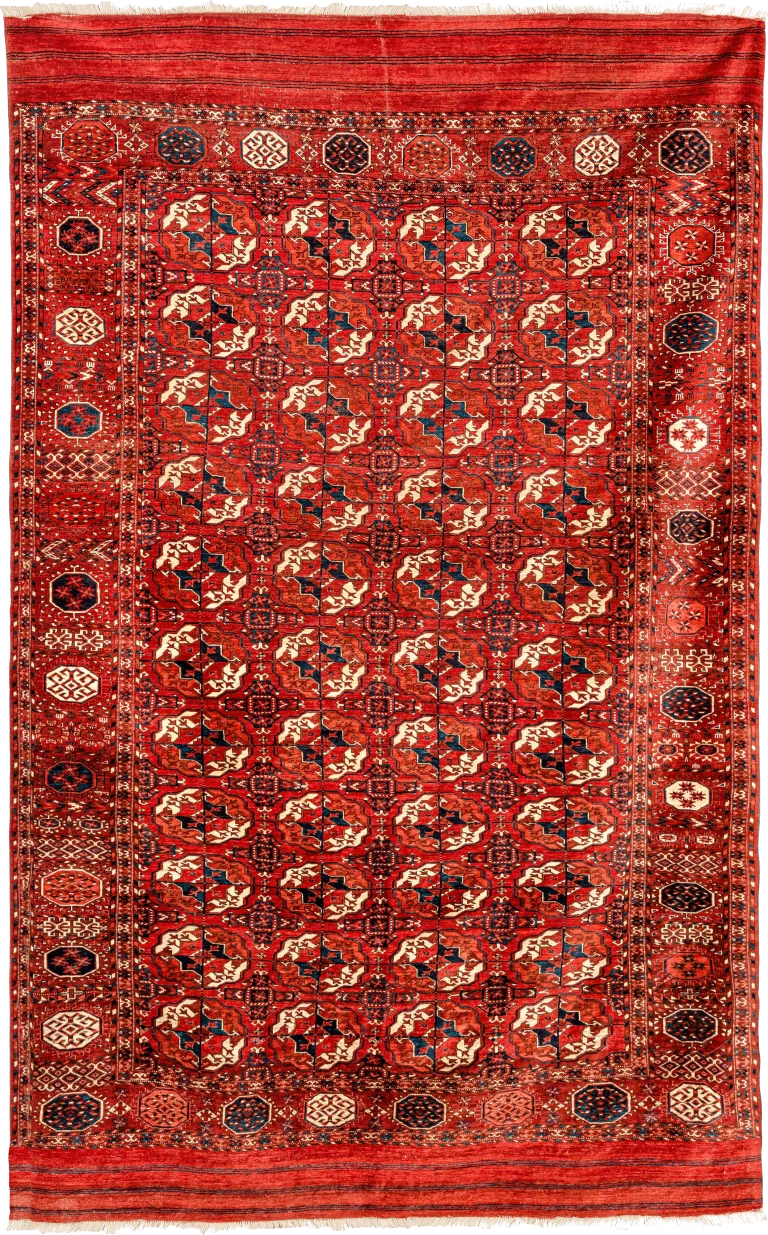
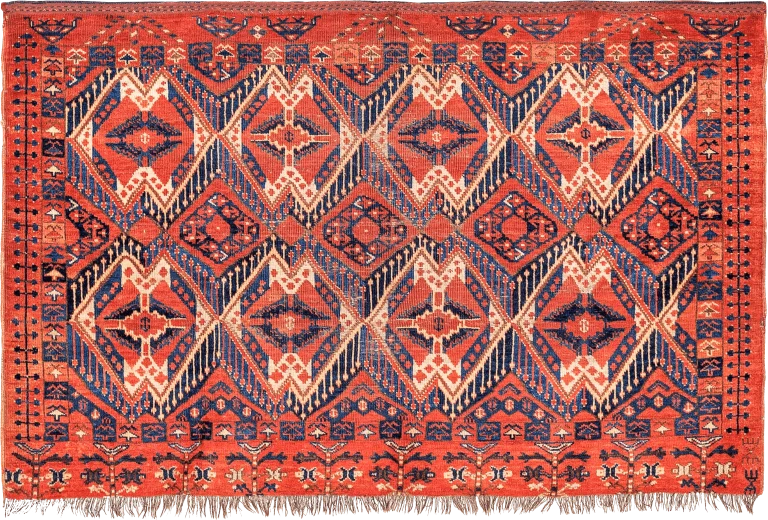
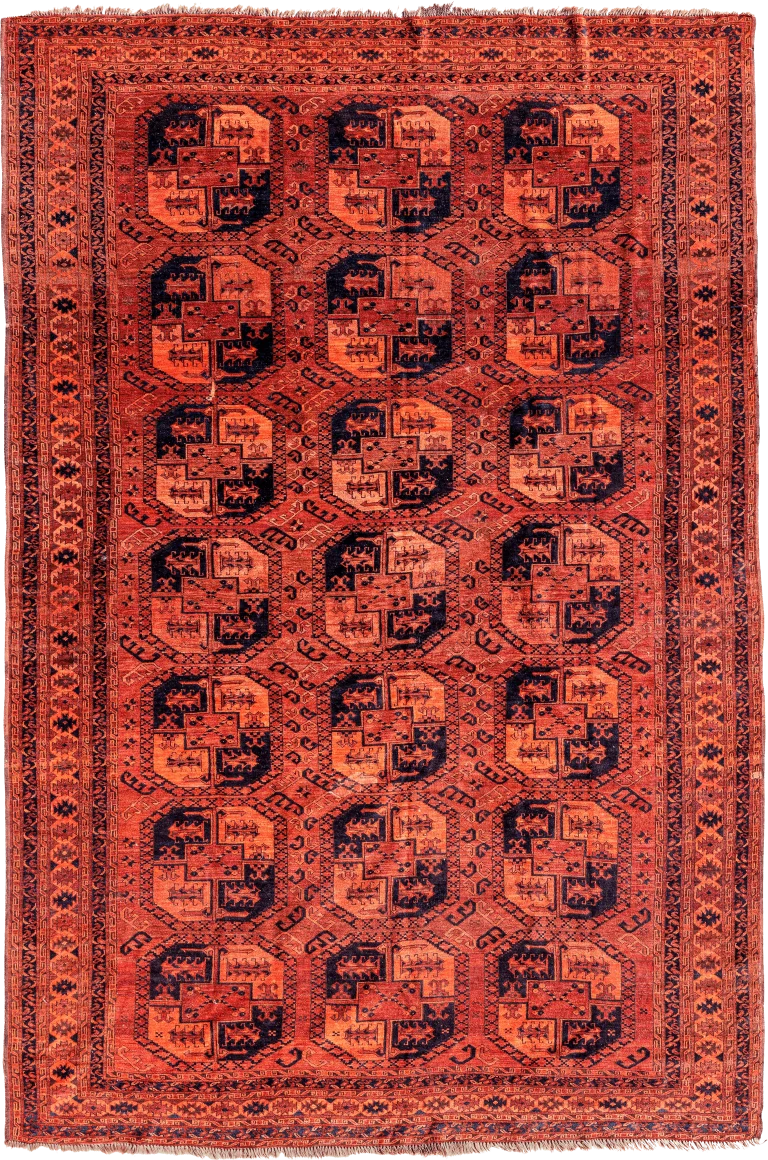
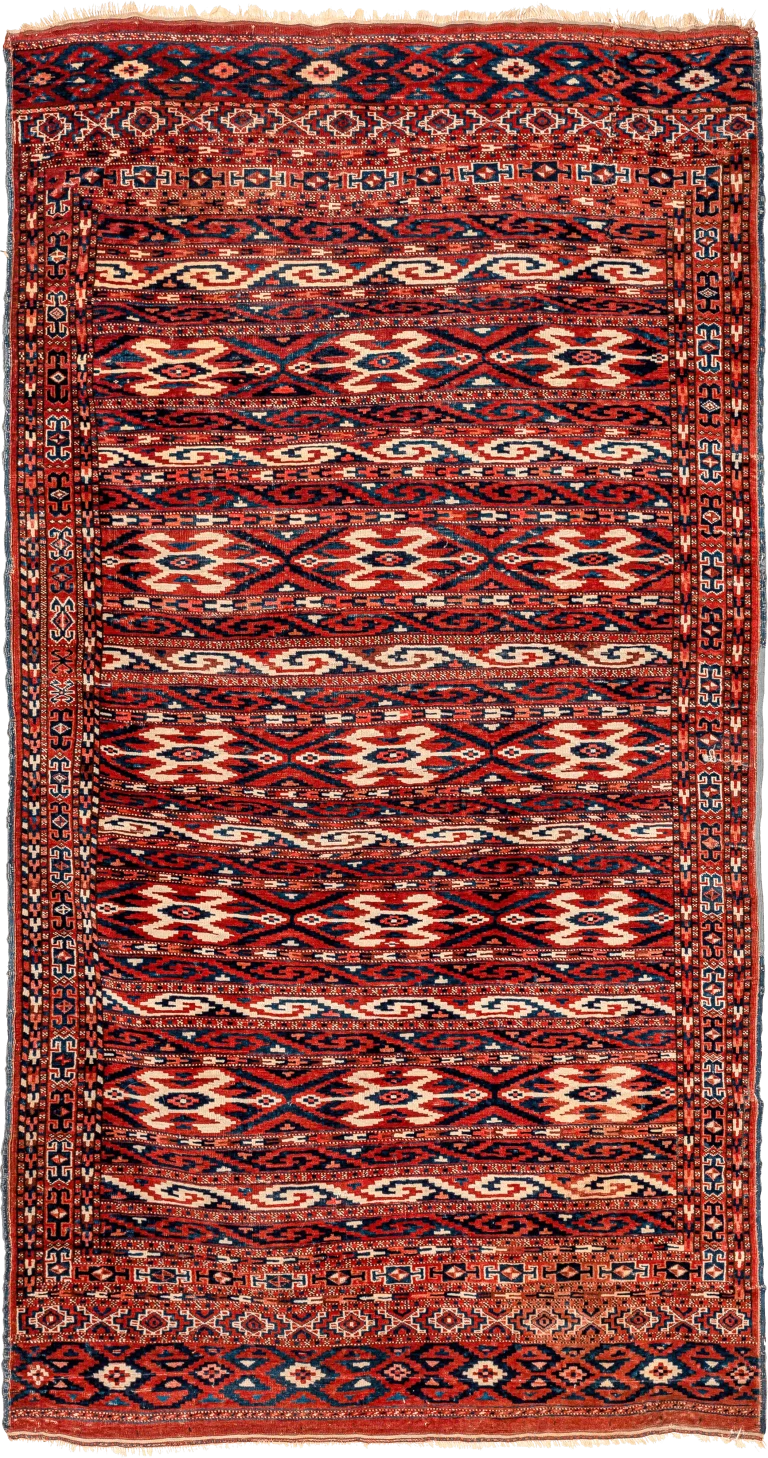
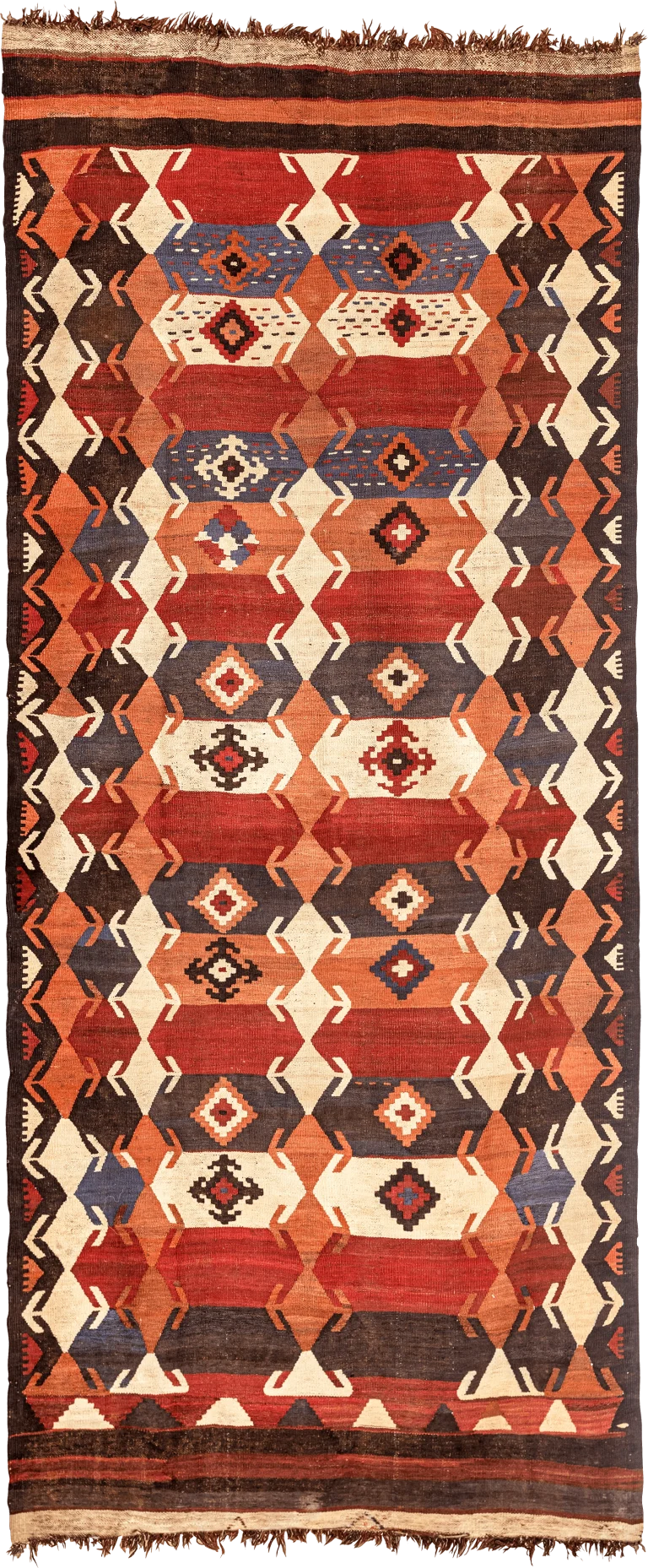
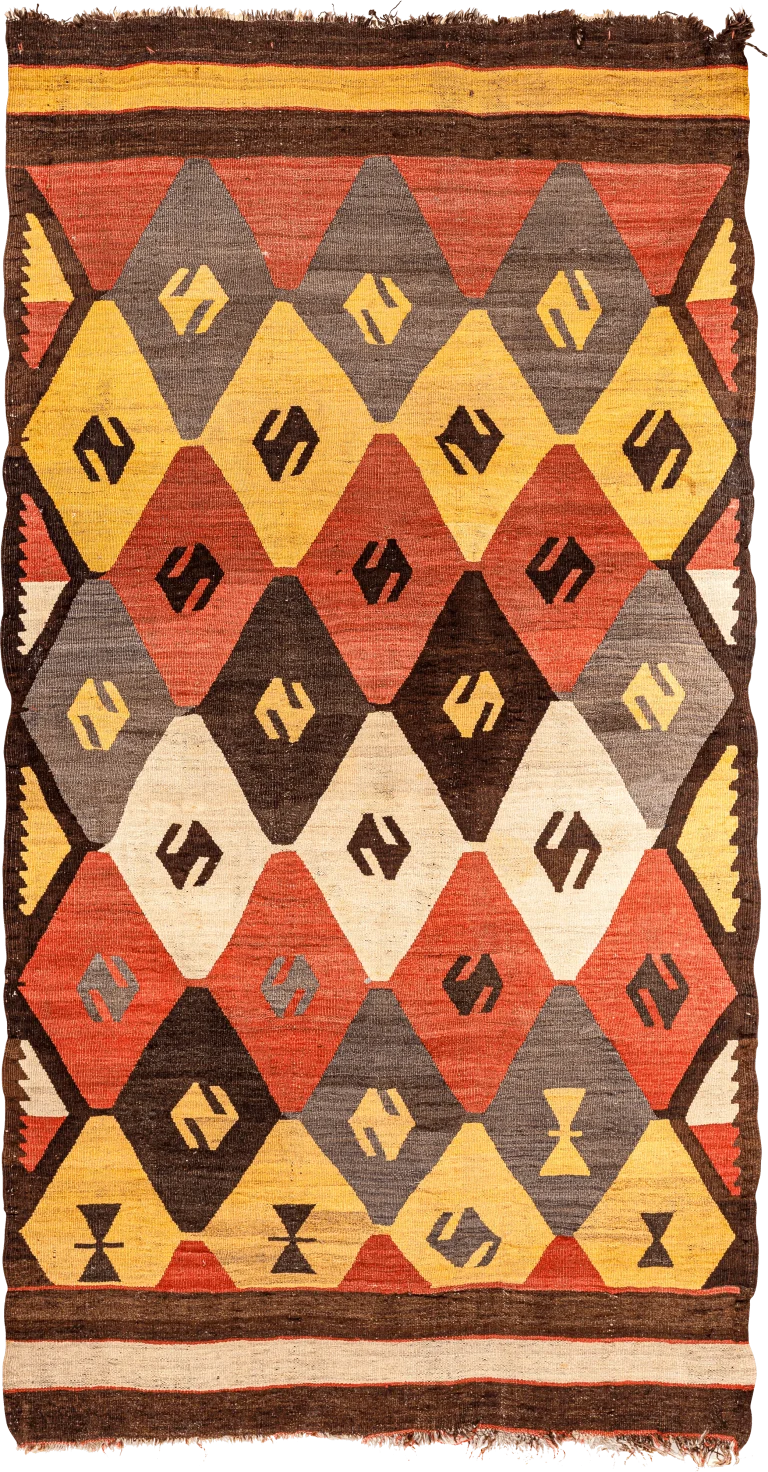
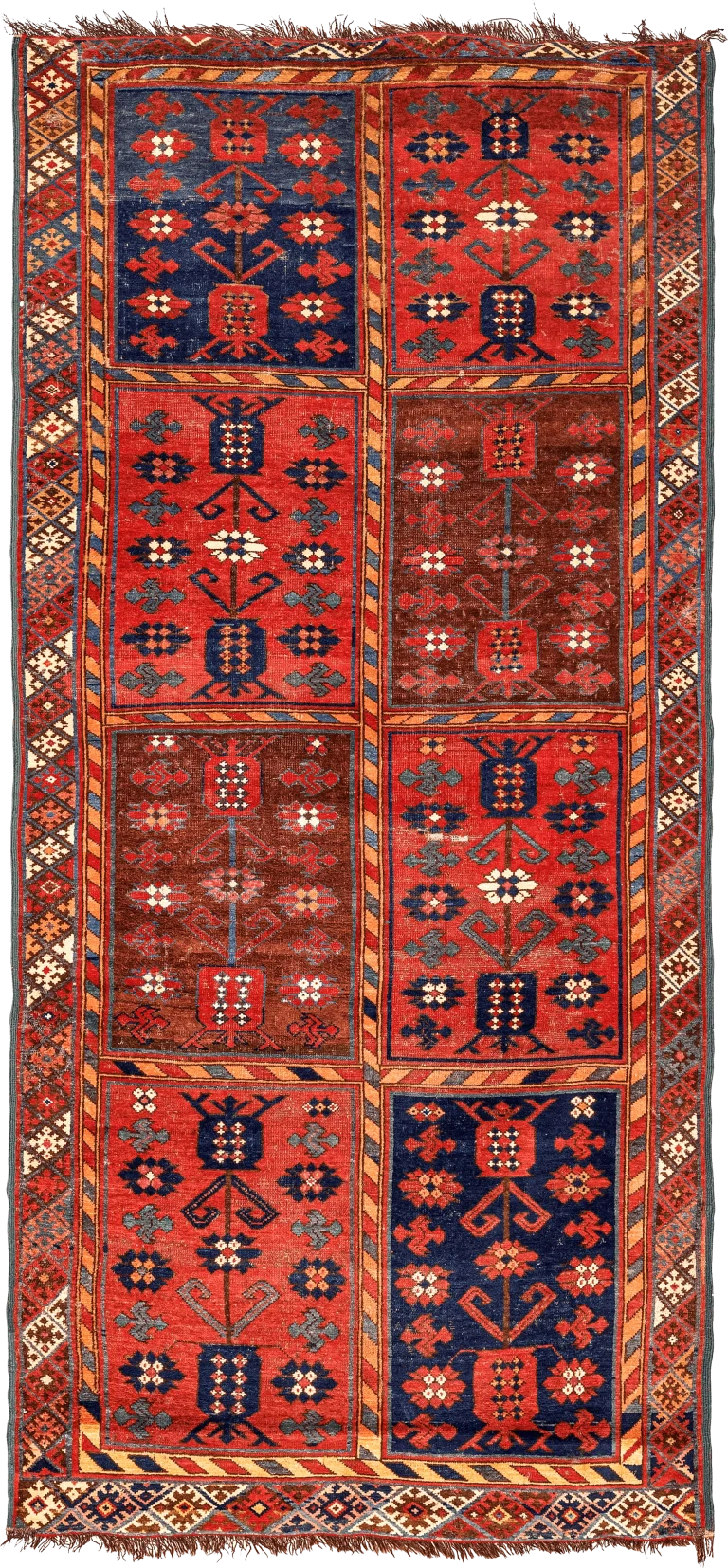
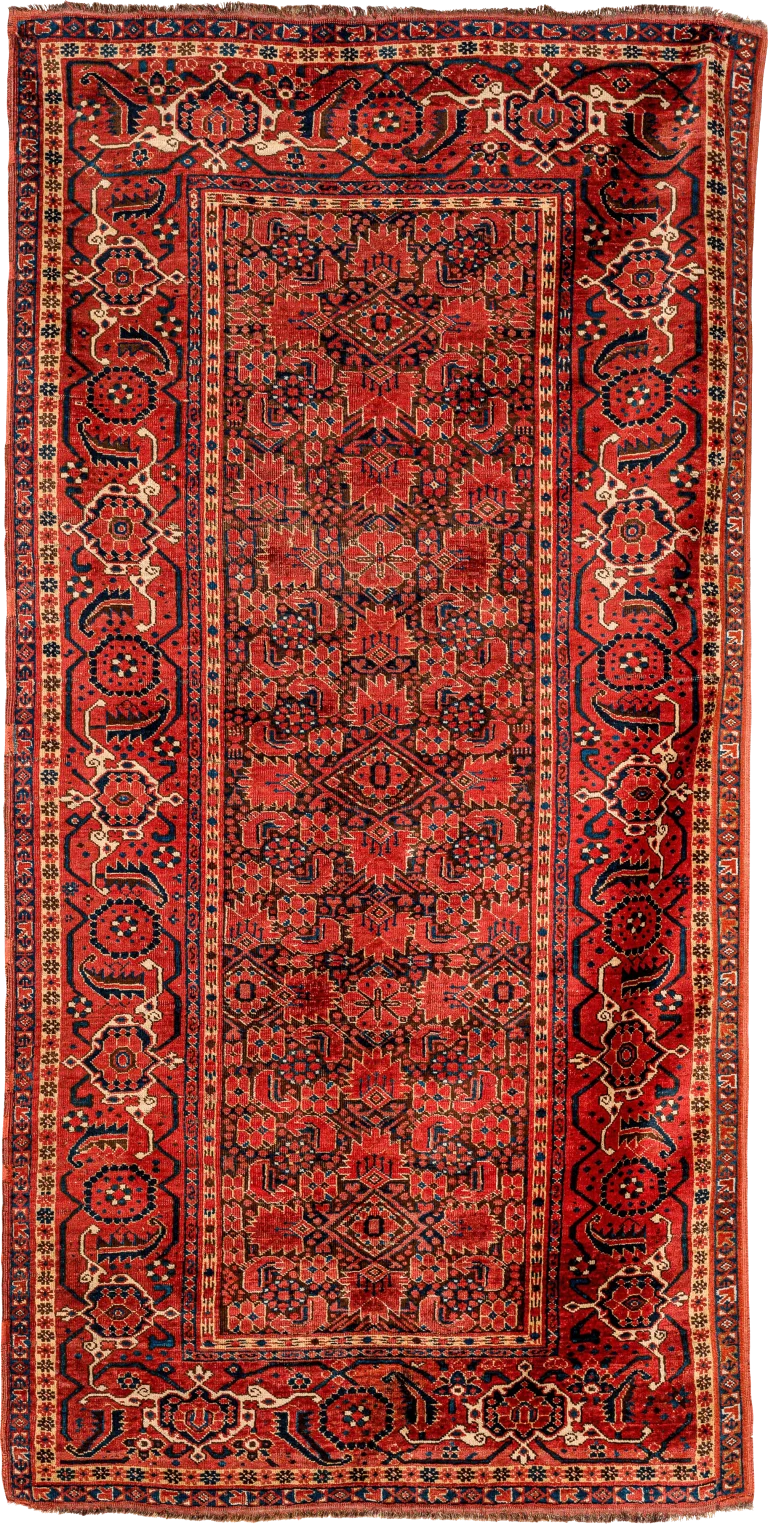
Of the Turkmen rugs in the collection, the majority are so-called Beshir rugs, named after the small town on the banks of the Amu Darya (Oxus). Of all Turkmen rugs, they are the most vivid in colour – deep reds, indigo in different shades, rust, golden yellows, and ivory – and innovative in design. The intensity of the colours reflects in part the soft water of the Amu Darya which fed into both the wool and the natural dyes.
Though known as Beshir in the markets of Bukhara, Elena Tsareva, the Russian scholar, has pointed out they were not woven in Beshir but more probably in the nearby region of Burdalyk, dominated by the Turkmen Ersari tribe. Some would have been tribal weaves made for an urban market: others made by professional weavers.
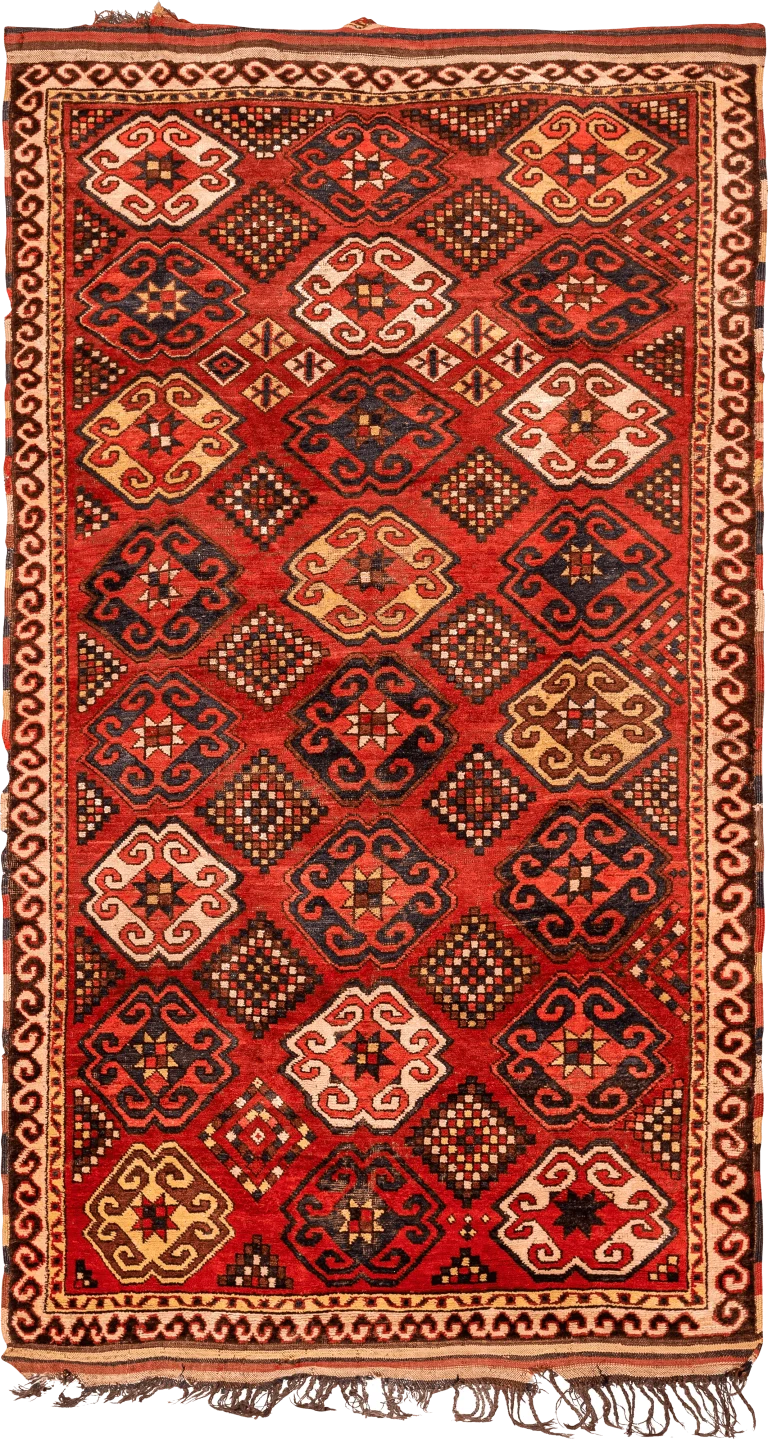
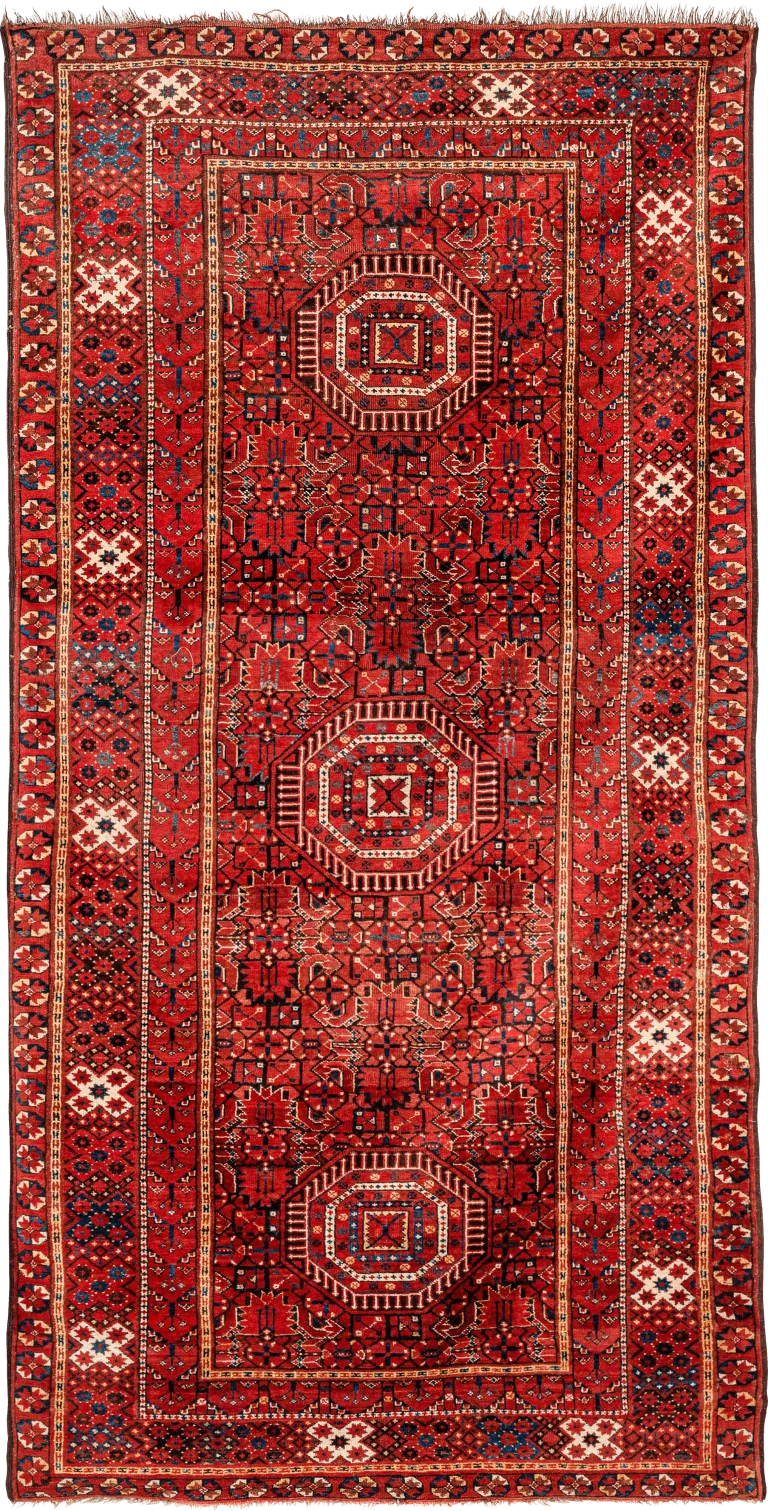
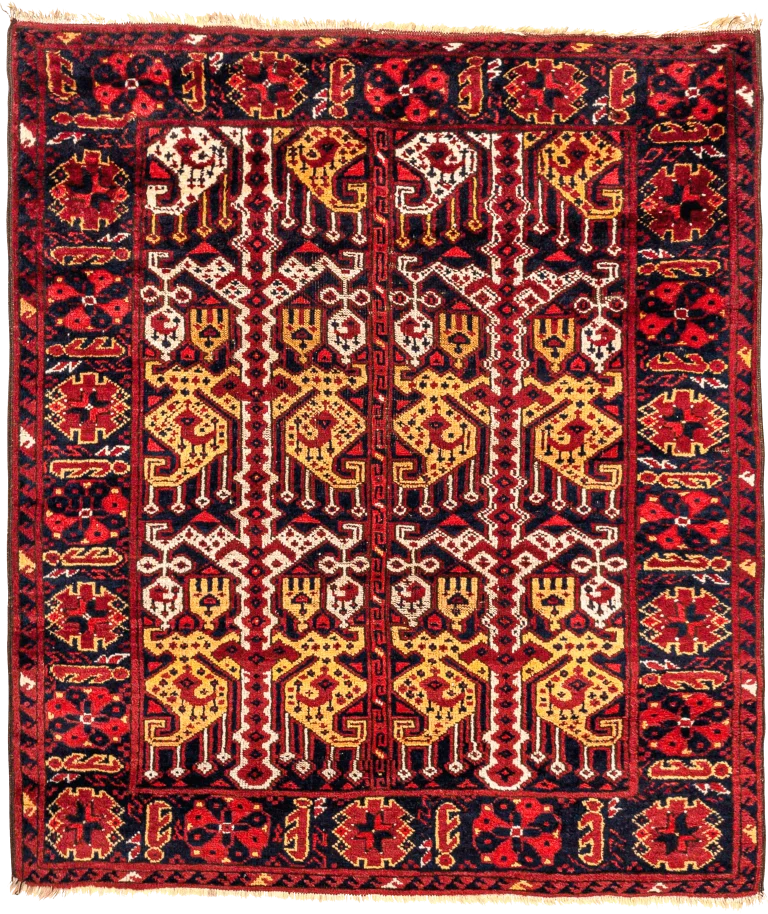
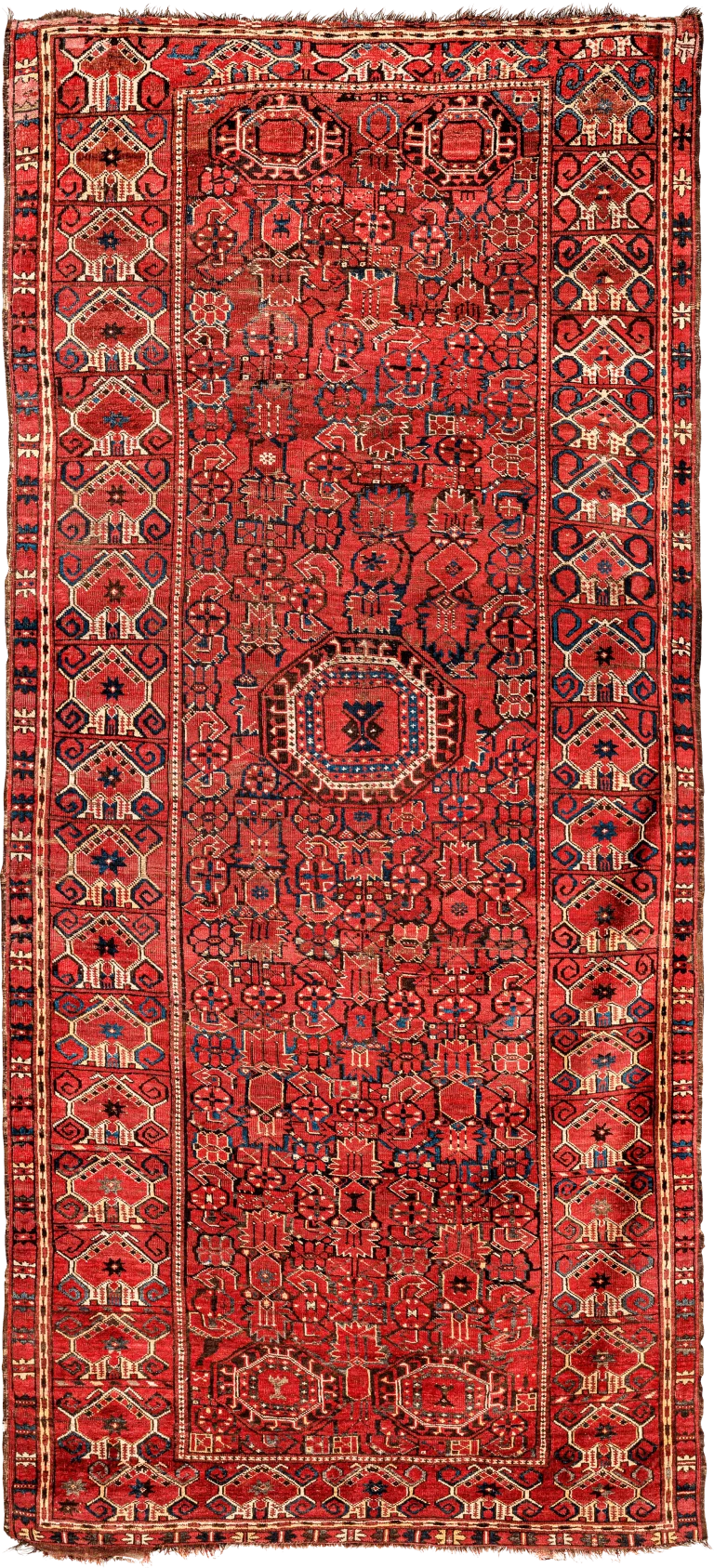
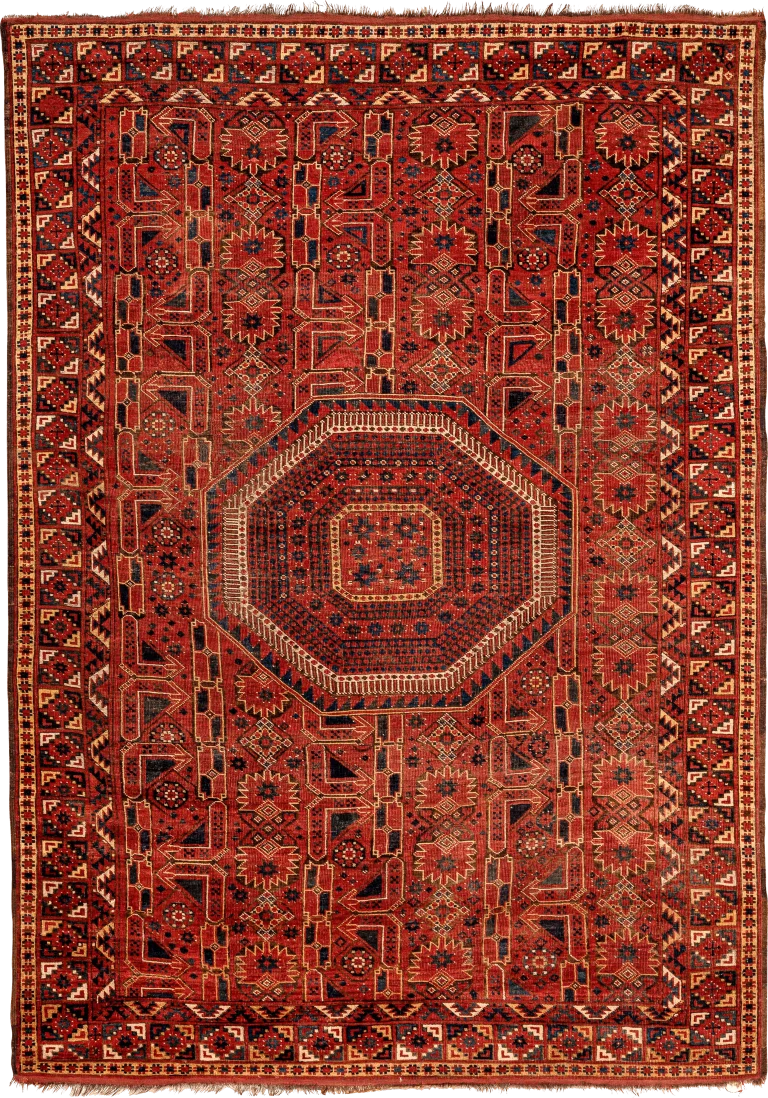
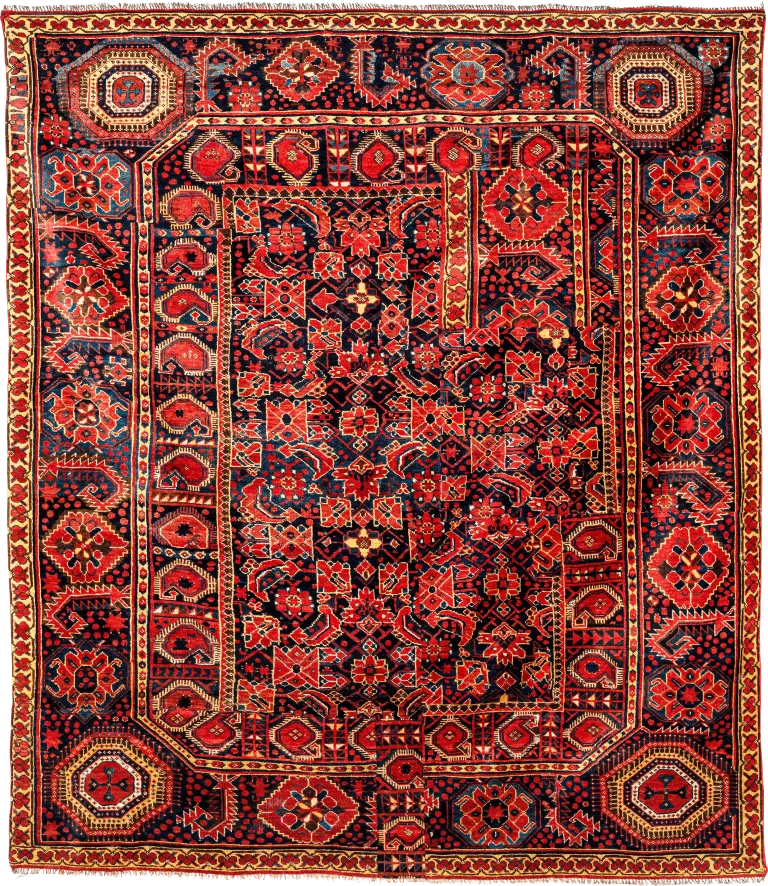
Many reflect the interlinking of designs and colours between rugs, ikat and suzani. The small rug [No 28] is clearly influenced by an ikat design. The oldest of the Beshir rugs [No 1], is an exceptional piece that dates from the late 18th or early 19th century. The field in a rich indigo blue is dominated by concentric “moon” roundels and densely populated by motifs both of Chinese origin and from the Bronze age, Turkish Seljuk, and Mongol legacy of the region. An extremely original Beshir [No 33] is in a lattice or trellis pattern created by diagonal lines that form diamond-shaped compartments across the field in deep reds, indigo and ivory. A similar design is picked up in the chuval (storage bag) [No 34] which in a Turkmen household was often regarded as a prize decorative item. Other Beshir carpets are characterised by large octagons in the field [as in No 2] variously interpreted as a fortress or a water tank (hauz) derived from a traditional Persian garden.
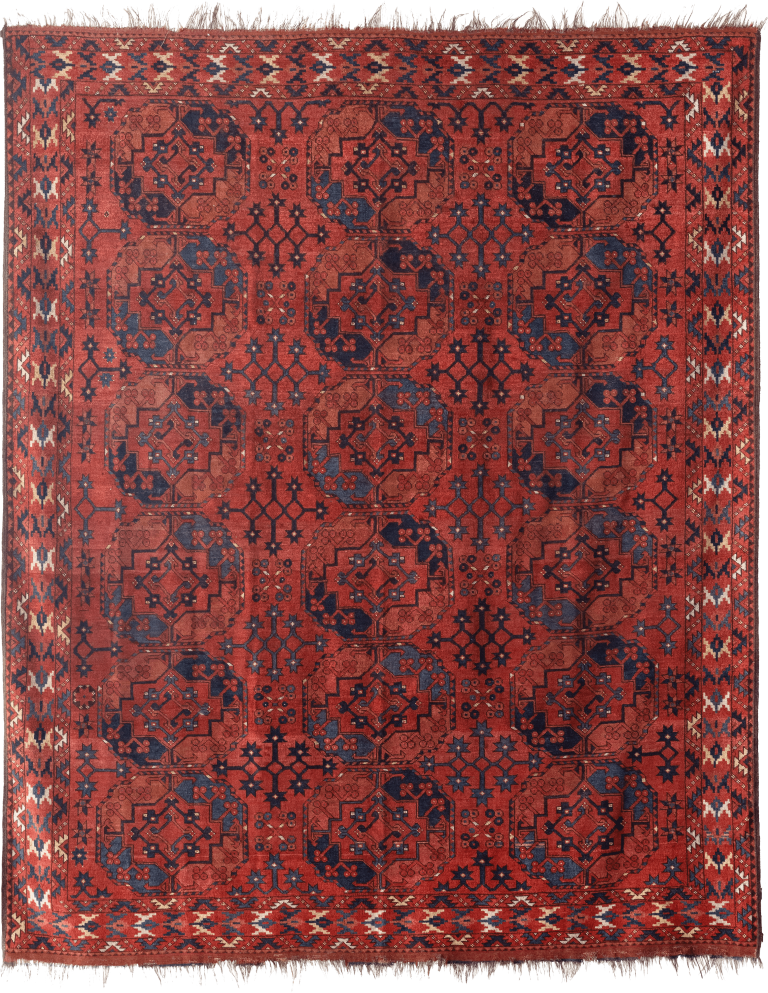
The collection also includes a large and finely woven main Tekke Turkmen rug from the early 19th century [No 20] of which there is a similar piece in the Metropolitan Museum in New York. Its rows of gols are characteristic of the Tekke tribe – each Turkmen tribe having its own iconic gol as though a signature of the tribe. The piece is complemented by the very fine Tekke chapan or Chyrpy [No 32].
The speciality of Beshir was woollen pile rugs. But an unusual piece is the very abstract, almost contemporary flat-weave gilim [No 36] in deep reds, indigo and ivory. Another striking flat-weave gilim is the Arabya, [No 44] a piece now rare to find, and woven for their own use by a small Arab community that lived near Bukhara.