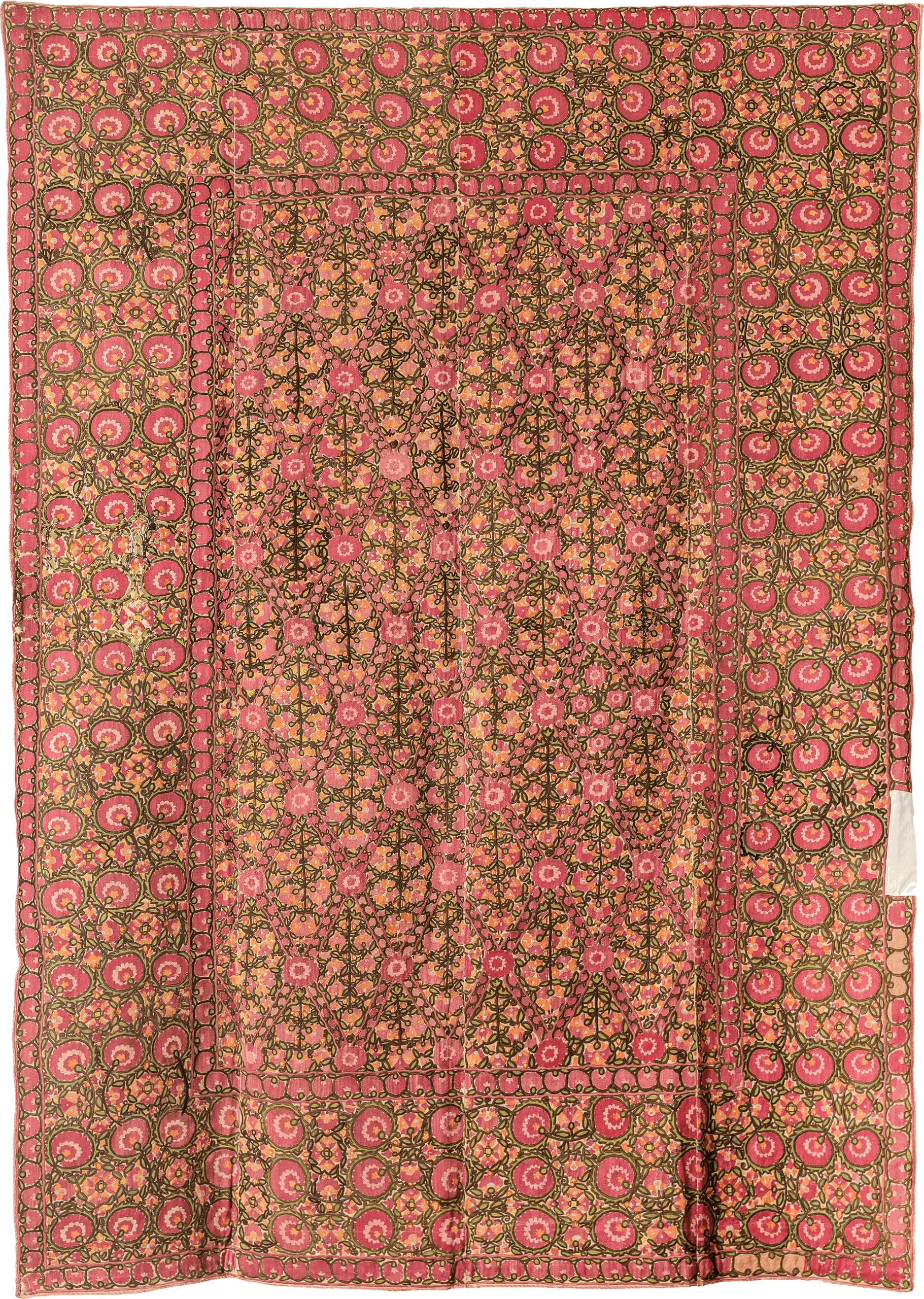
This suzani is from the Ferghana Valley which produced some of the most lyrical and naturalistic embroidery pieces of Central Asia. The Valley spans eastern Uzbekistan, southern Kyrgyzstan, and northern Tajikistan and thus lay across the Silk Route absorbing influences from Persia, China and Mughal India. This piece is densely filled with what seem to be nodding poppy heads that are a signature of Ferghana Valley suzanis and which were grown there. You can see in the piece drooping curved stems with flower heads that appear to nod or bend. The coral-pink/salmon colour palette is also very typical of Ferghana awork. There are echoes in the piece of Persian manuscript illustrations. Some scholars detect adaptations in the poppies of Chinese peonies. But the densely packed floral composition in the central field is also distinctly reminiscent of Mughal textile design, particularly the millefleur (thousand flowers) tradition. Poppies were central to the economy and culture of the Ferghana Valley. Like pomegranates, also rich in seeds, they represented fertility and prosperity. This piece was likely made towards the end of the 19th century.
