A PERSONAL NOTE
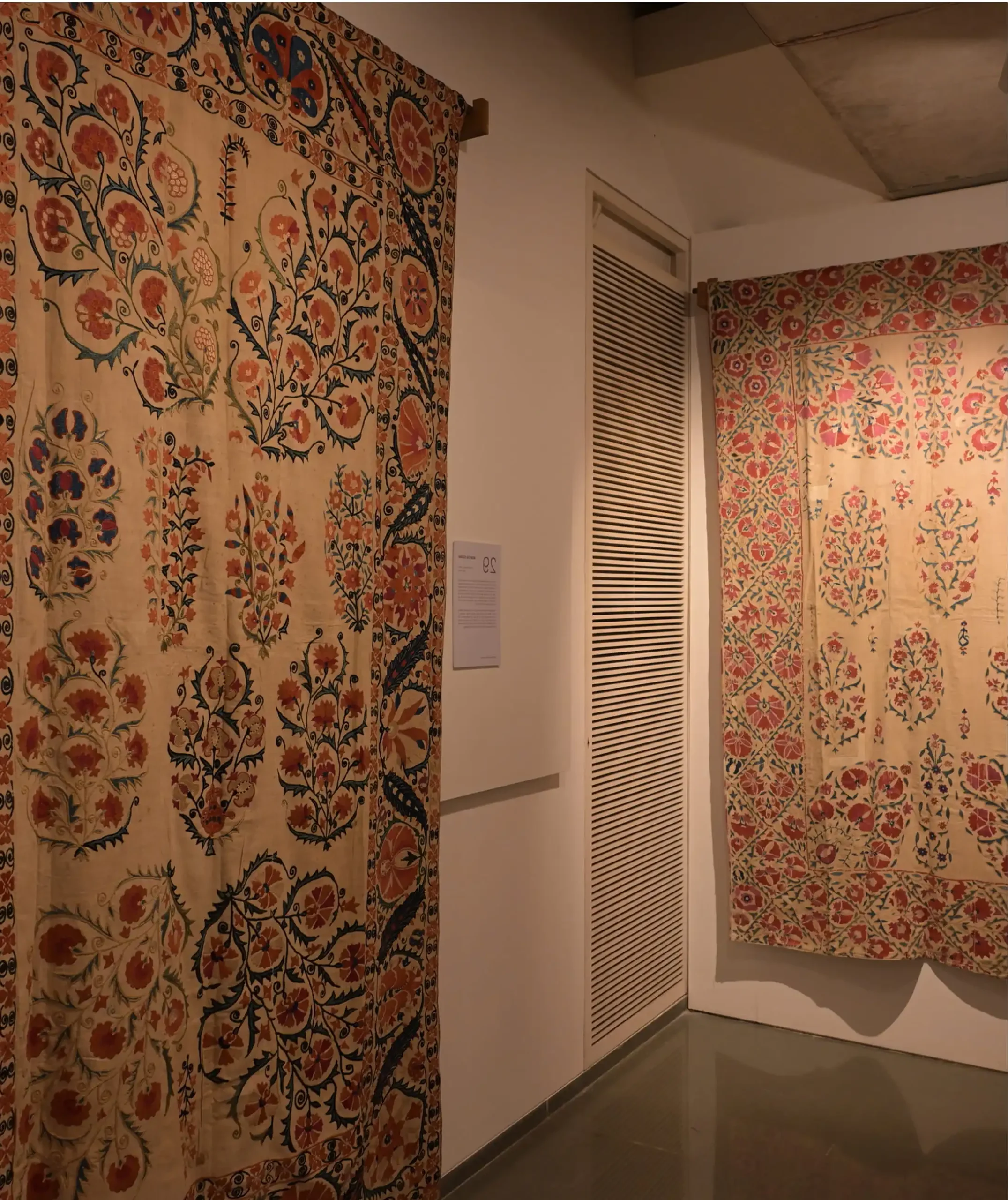
From the exhibition at the Kasturbhai Lalbhai Museum, Ahmedabad
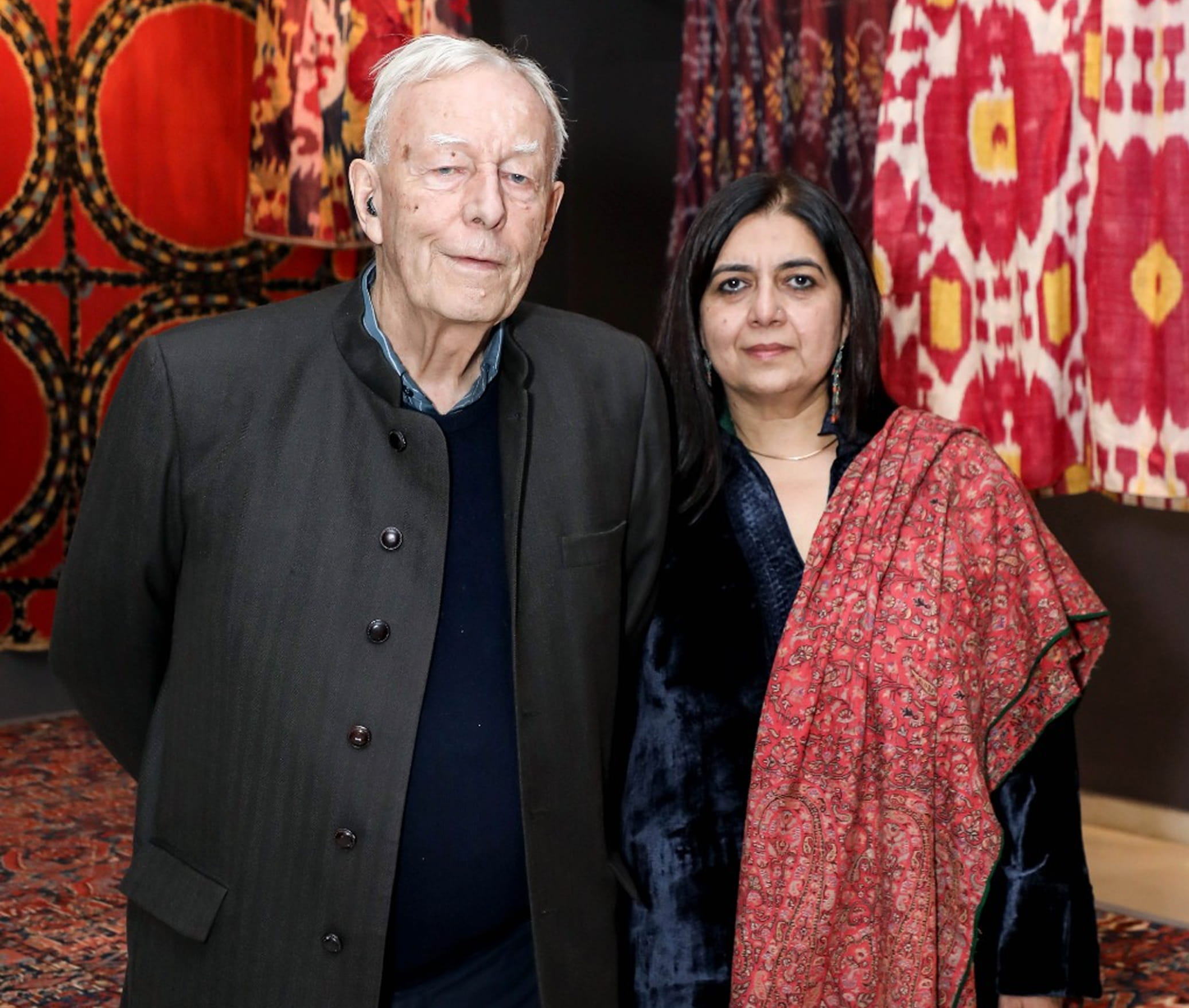
 David writes
Antique Central Asian textiles have been a passion of mine for many years. The collection of suzani, ikats and rugs included in this digital catalogue reflect and celebrate this.
The origin of this obsession lies in the several years I spent in Iran in the 1970s. In a country now closed to most westerners, I had the luck to live there as a journalist working for the Financial Times before the Revolution.
Life in Iran exposed me to the world of Persian tribal rugs, flat weaves (gilims), horse covers and saddle bags. I was amazed at their incredible sense of colour and design. Many reminded me of the abstract paintings I had already begun collecting in London. Yet in sharp contrast to such paintings, these were art works made by nomadic people largely on the move and often living in harsh conditions. I was deeply struck by their sophisticated sense of form and colour – made more intense by the use in the 19th century of natural dyes.
I spent much time in the carpet shops on Ferdowsi Avenue in Teheran – I remember Bolours most of all. I had the chance to rummage through the bazaars and travel widely across the country. I caught up with tribes like the Qashgai in the south-west and the Shahsavan in the north – west, on their migrations. I crossed the country on what were then often dirt roads to Tabriz, Kermanshah, Isfahan, Shiraz, Kerman, Yezd, Meshed, Zahedan – journeys now impossible.
With my former wife, Jenny, I was a founder member of the Teheran Rug Club – along with Parviz Tanavolli, the Iranian sculptor and collector, and Amadeo de Francis, a senior diplomat at the Italian embassy and rug enthusiast. What bound us was our common interest in tribal rugs, gilims, horse covers, mafrash (storage bags) and other tribal pieces.
I also – both then and later – spent considerable time in Afghanistan. I first went visited when the King was still in power, arriving in Herat by car, when the only noise on the streets was the sound of tonga bells. The last time I was there was when the mujahideen put the city under rocket fire as they pushed the Russian- backed Najibullah from power. I left Kabul on the back of a truck driving down a road littered with burnt out Russian tanks, to finally arrive to safety at the Pakistan border.
But it was in Kabul, in quieter days, that I first saw and bought a couple of suzanis. My later regret was that I did not buy more. Sadly, as always in turbulent times, exceptional pieces came on the market both in Kabul, and in Peshawar and Islamabad in Pakistan, to where many Afghans fled.
Collecting came to a pause when I moved to Paris in the early 1980s as the FT bureau chief. Unlike the UK, Germany or the US, Central Asian textiles were rare to find in Paris outside institutions like the Guimet museum. From Paris I moved with the FT to India – another country with a rich history of textiles. Mandeep (to whom I am now married) and we built a small collection of Indian textiles – phulkaris, chikaen work, zardozi embroidery, kantha embroidery. We also developed a company, Shades of India, as a contemporary interpretation of India’s craft legacy in apparel and home textiles.
Living in India – and with the huge geopolitical changes that followed the collapse of the Soviet Union – visiting Uzbekistan was now possible. The Central Asian region had been inaccessible to me under Soviet rule but travelling to Uzbekistan opened up that world and fired again my interest in Central Asian textiles.
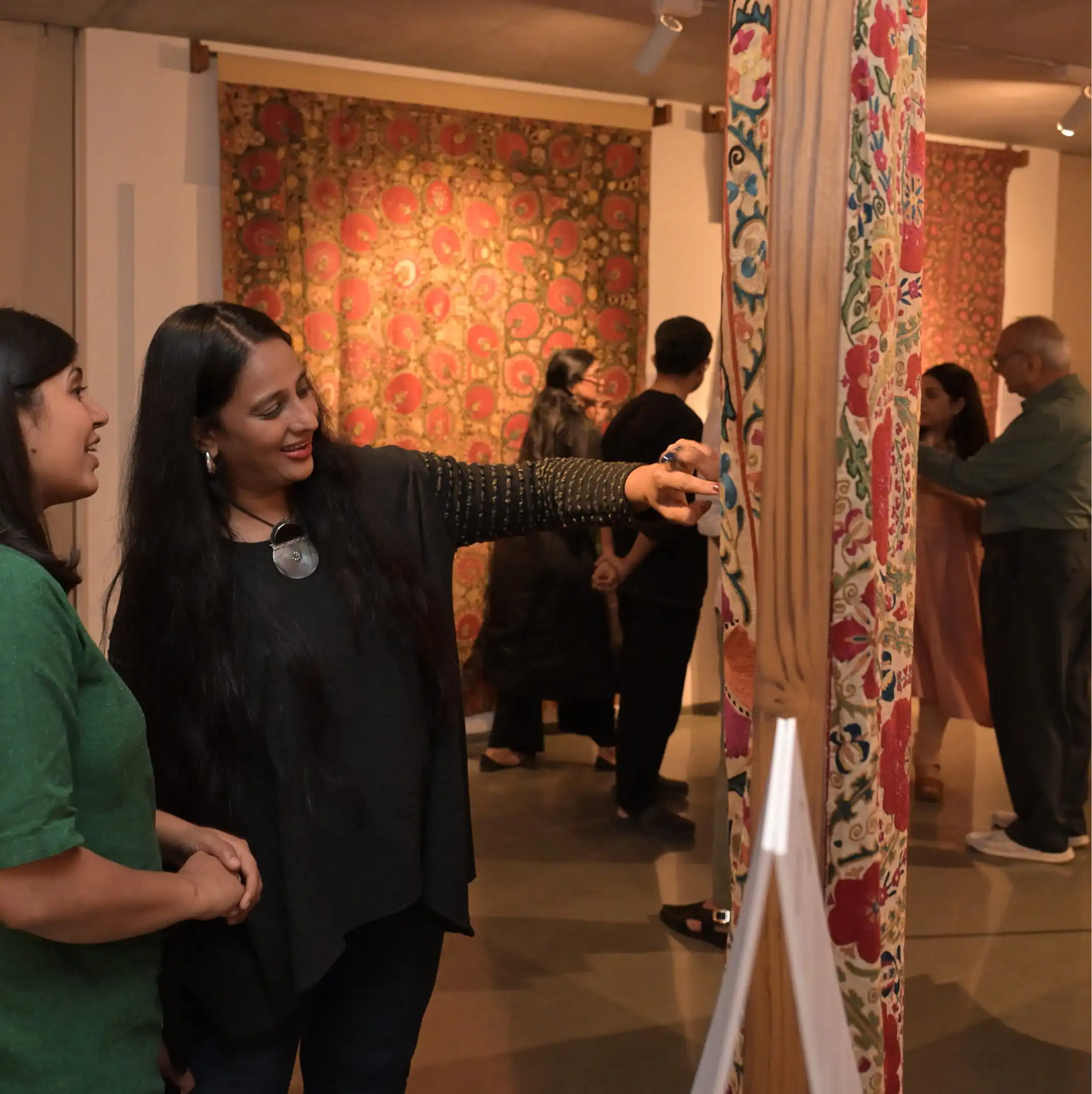
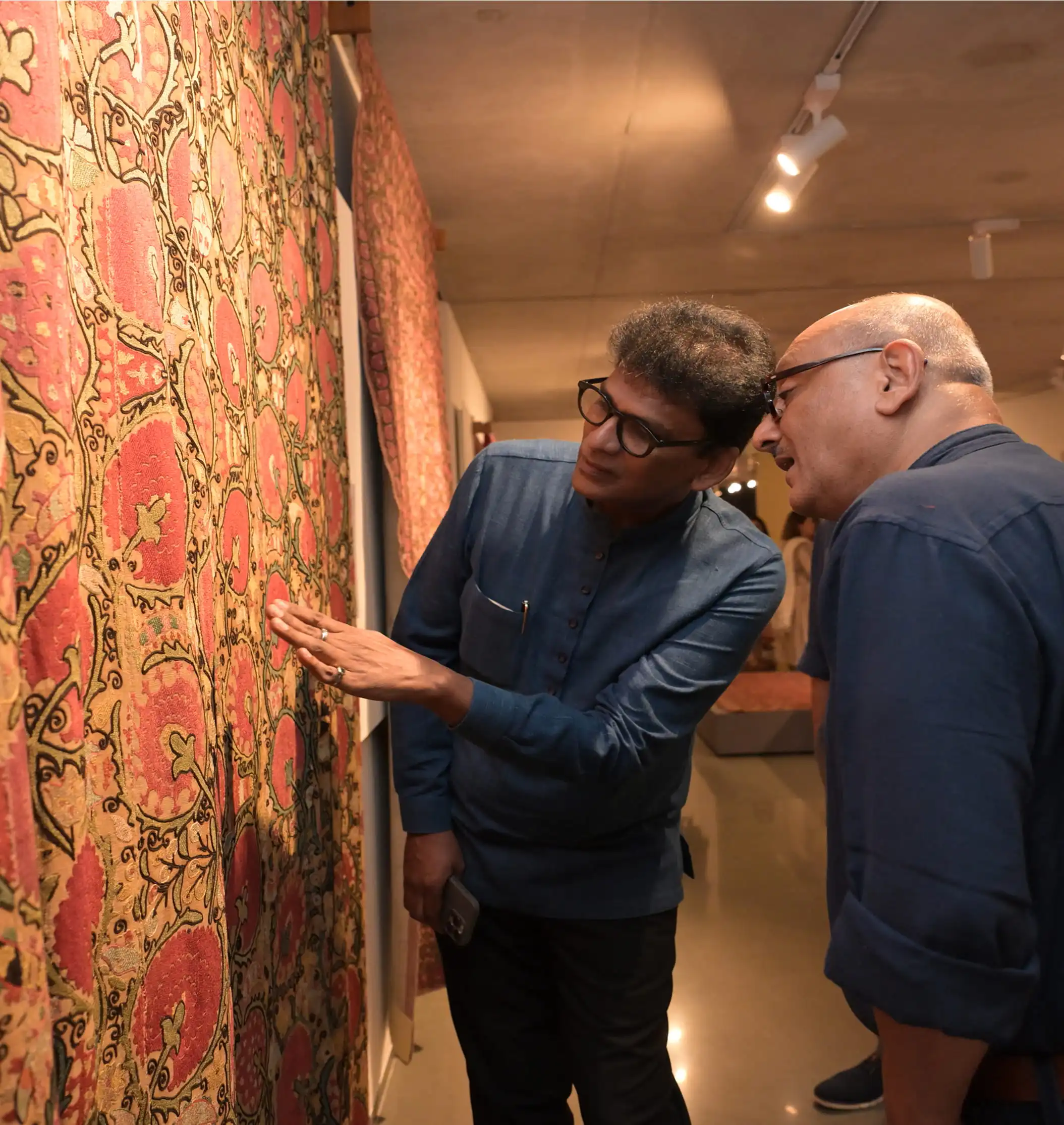
Through visits I developed new contacts and networks that extended to collectors in Turkey and Europe. Over the years I was able to gather the suzani, ikats, chapans and rugs that are now on this website. We first exhibited them to the public at the Crafts Museum , Delhi and then in Chennai, followed by the Kasturbhai Lalbhai Museum in Ahmedabad. The exhibitions got an astounding reception, which I had least anticipated. It inspired me to make them permanently accessible through a digital catalogue. Though India is geographically close to Central Asia and there is much common cultural ground there is relatively little awareness in India of the textile wealth of Bukhara and its surrounding regions around the Silk Road
There is little by way of literature on Central Asian textiles. Two new books have just come out – Suzanis by Christian Erber and Penny Oakley, and Abr on the Chapans, with history and analysis by the Russian scholar Elena Tsareva. These appeared too late for me to use. I was, however, able to draw on Elena Tsareva’s analysis of Turkmen rugs from the Neville Kingston collection.
The main intent of this digital catalogue is to bring together the suzani, ikats and rugs to highlight both what a remarkably creative period the 19th century was for textiles in Central Asia, and to show how each of these three categories informed each other through designs, colours and motifs, all layered against the cultural background of the Silk Road.
David and Mandeep Housego live in India where they own and are the Directors of Shades of India, a design led company that brings a contemporary interpretation to Indian textile crafts. They have a small collection of antique indian textiles including pulkaris, chitzan and kantha embroideries.