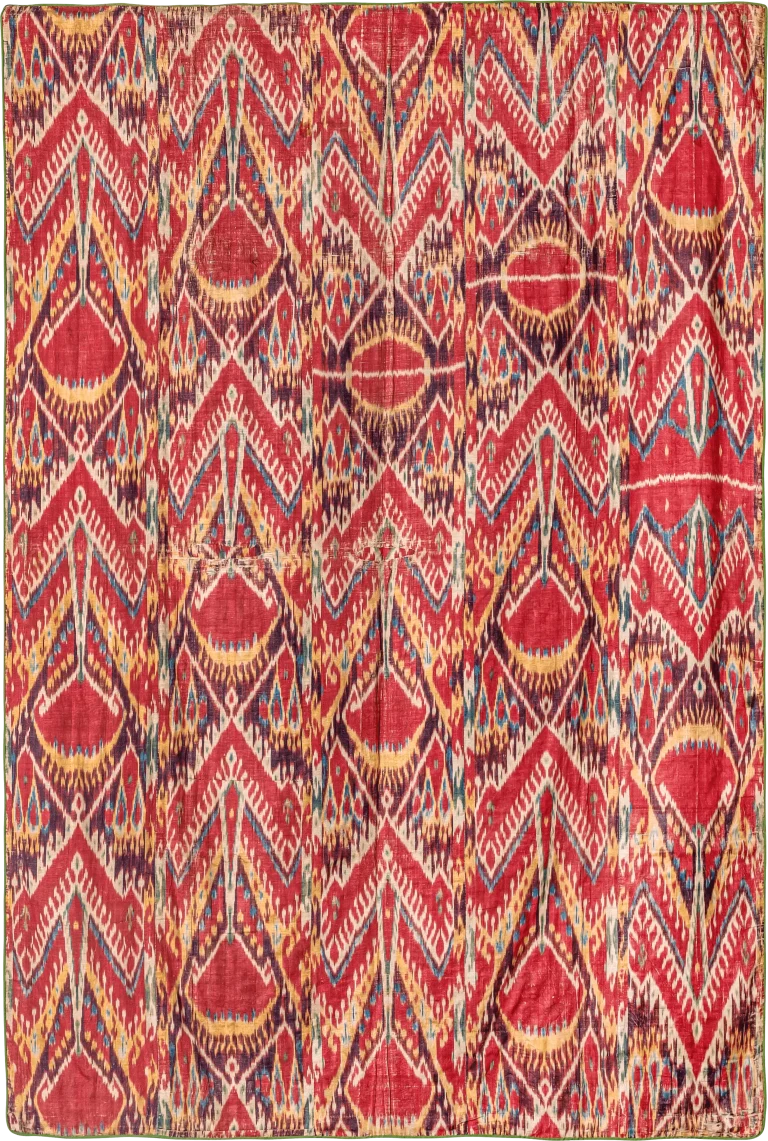
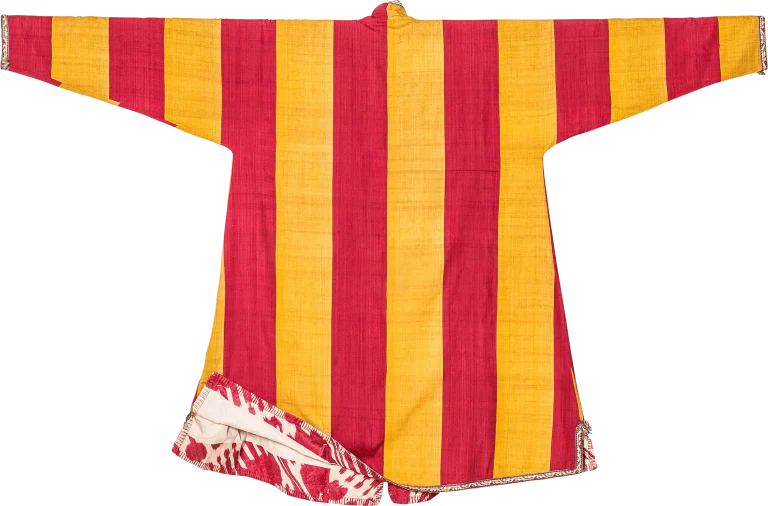
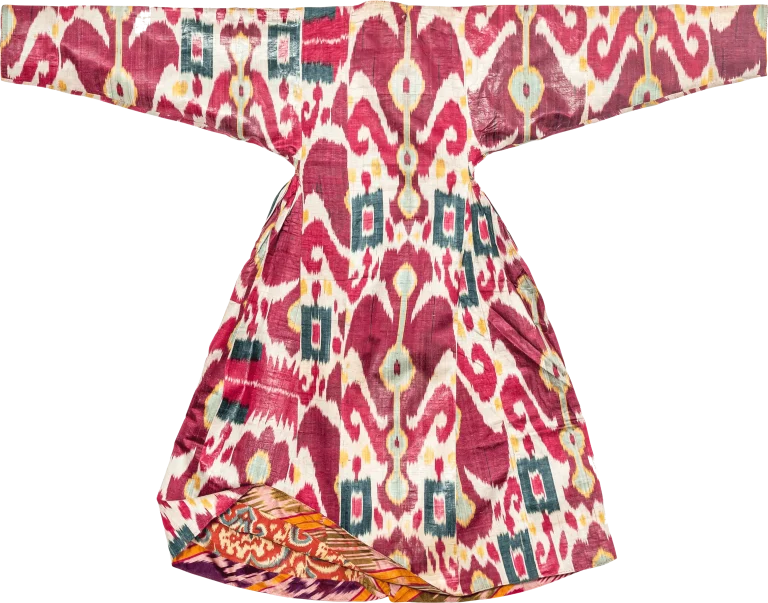
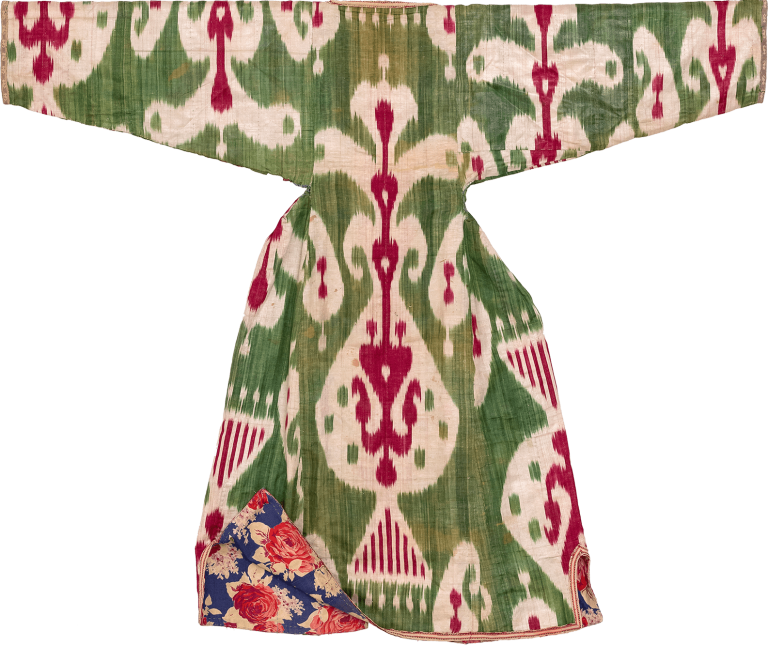
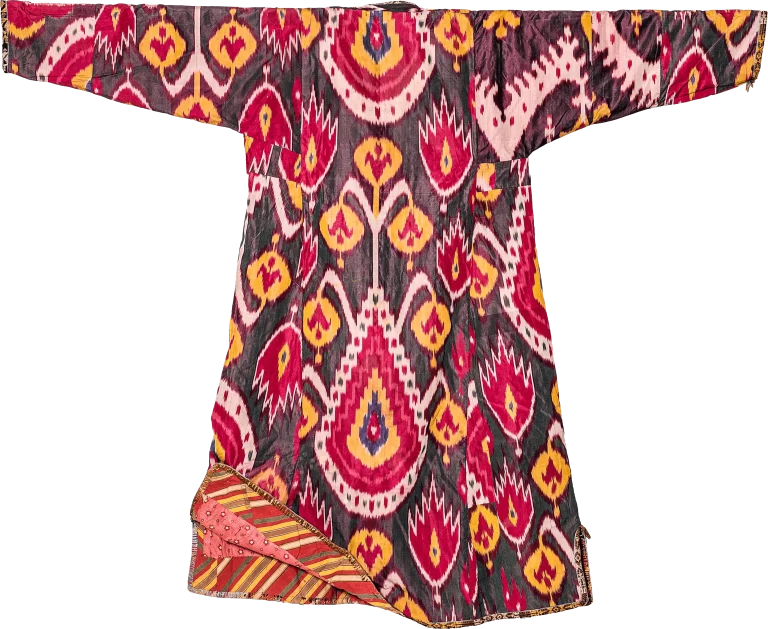
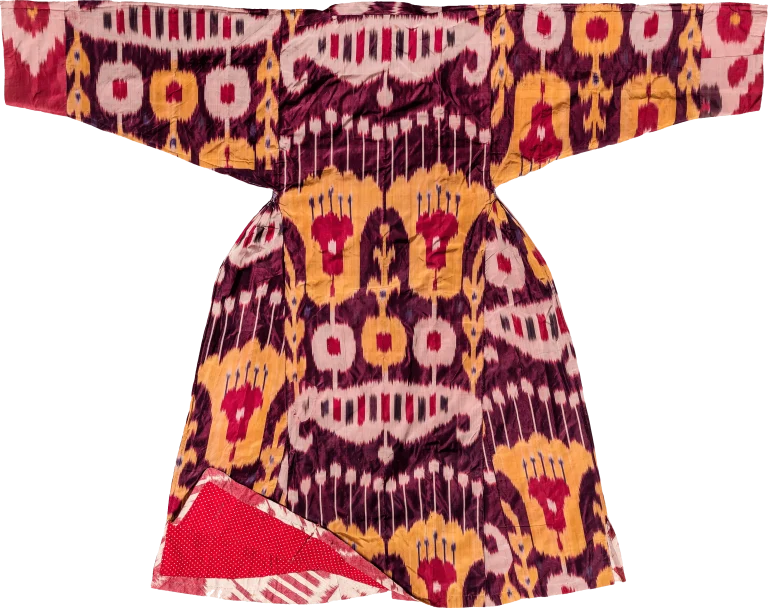
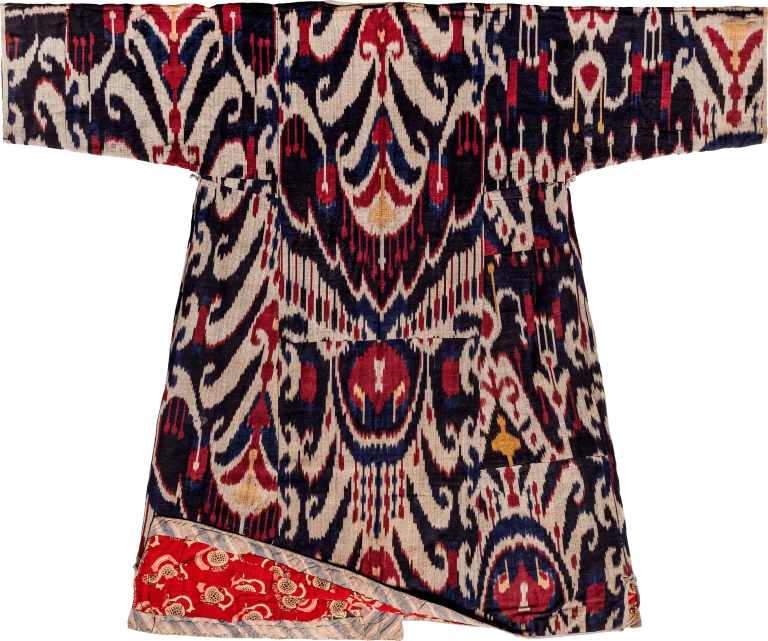
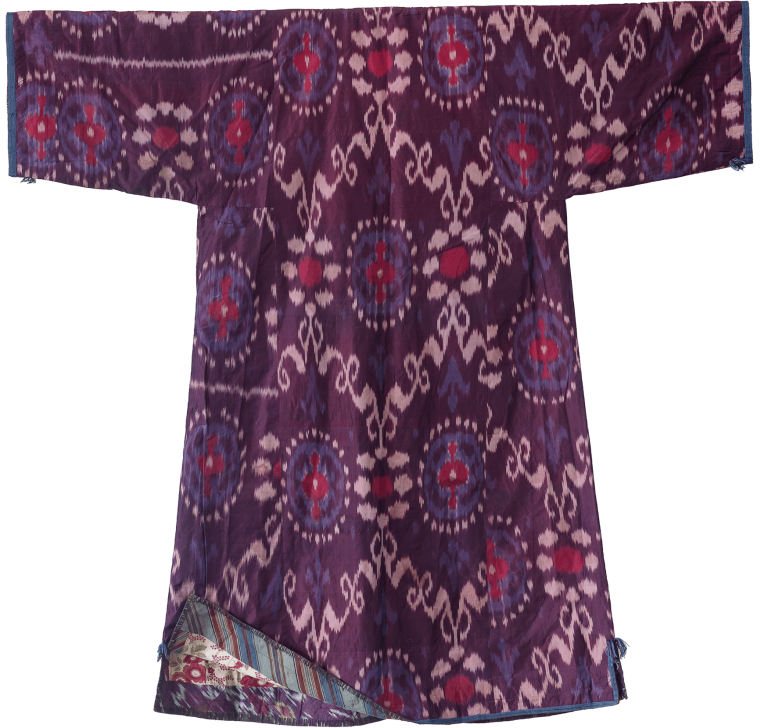
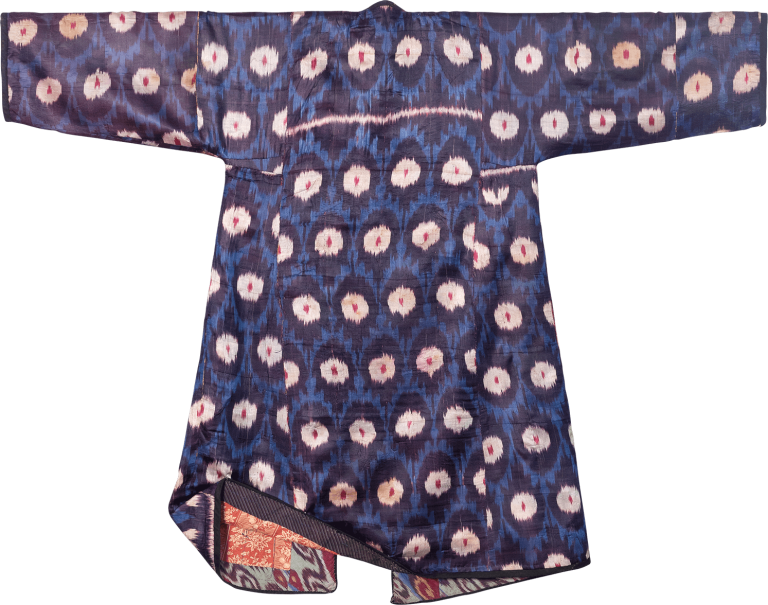
“Are these the most beautiful textiles in the world?” read the headline of the review by the Washington Post’s art critic of the Guido Goldman collection of Central Asian ikats. Put on display in Boston some 25 years ago and widely considered the greatest collection of its kind, the vibrancy of colours and designs – then familiar to only a few in the West – came as a breathtaking sensation.
The complexity of producing such pieces, and the number of people involved, meant that production was limited. The great period of ikat production in Central Asia, of both wall hangings and apparel, was limited to a hundred years from the late 18th to the late 19th century – a time of rare stability and cultural revival in the region. By good luck, there are a few pieces here on display.
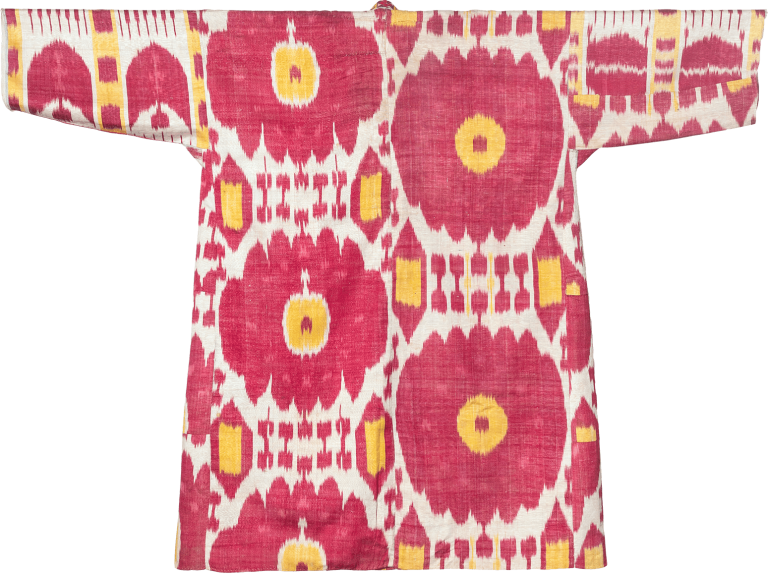
As the catalogue to the Guido Goldman collection explains, the word ikat is derived from the Malay-Indonesian verb, meaning to bind, tie or wind around. Ikat is an ancient technique of wrapping yarn to form an area of resist and then dyeing it in sections before weaving it into a design determined by a professional. In Central Asia, Bukhara and later the Ferghana Valley were centres of this art. Unlike in suzani, where the embroidery was done by them, women had a minor role in ikat weaving – mainly nurturing in their clothing the eggs from which the cocoons were formed! The silk reeling, thread spinning, dyeing, and weaving were done by men, often organised in guilds in different parts of the city. The dyeing of indigo and green rested with the Jewish community whereas Tajiks were responsible for red and yellow.
Designs were inspired by all that filled Bukhara, and the oases and deserts beyond. The ikats drew on the tile work on mosques, the painted walls that decorated houses, the jewellery that women wore, in turtles and snakes, in the moon and star motifs in red copiously found in suzani, in the geometrical forms and lattice work of the woollen rugs of the nomadic Turkmen tribes, in the foliage and iconic forms from the Bronze age and later. Ikats were saturated in colour – reds, yellows, blues, greens and blacks- each with unique significance.
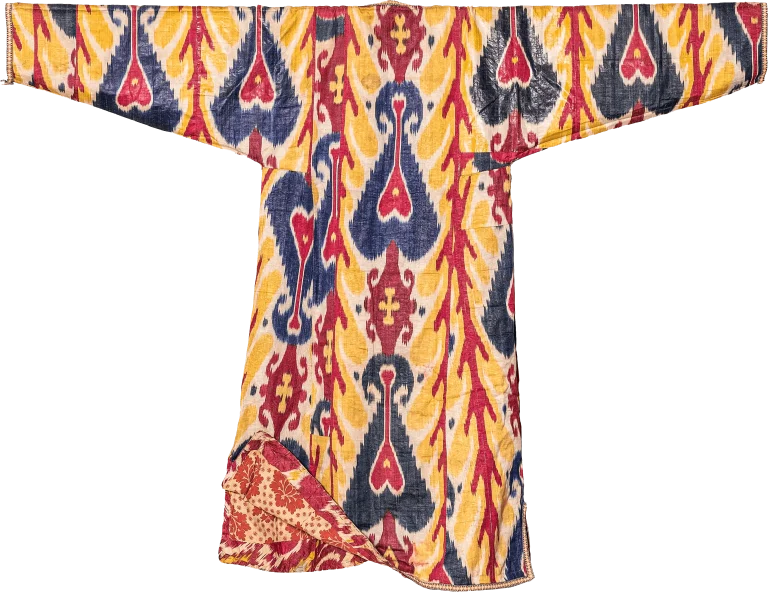
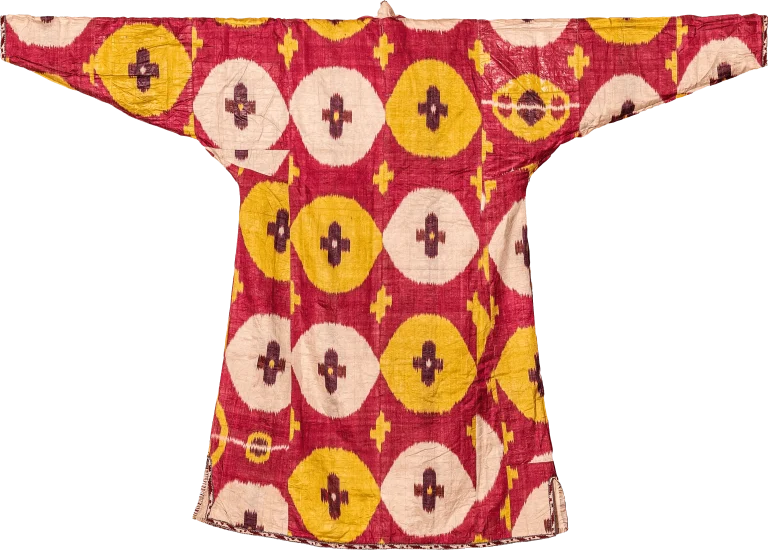
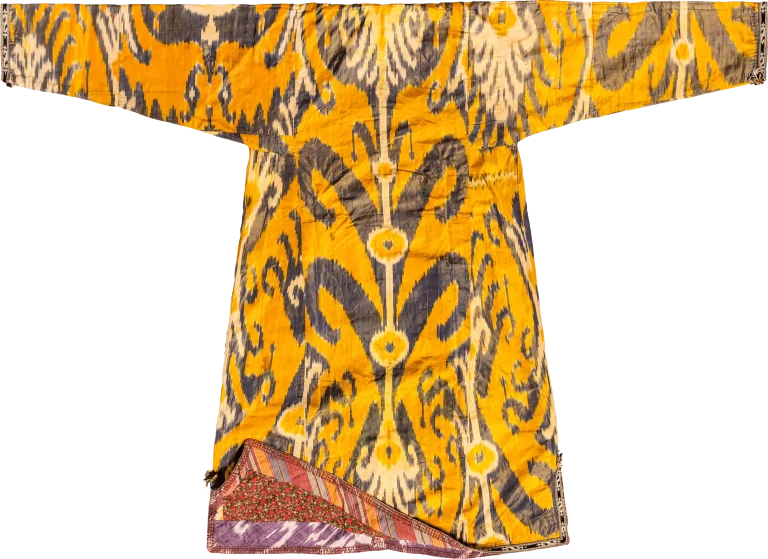
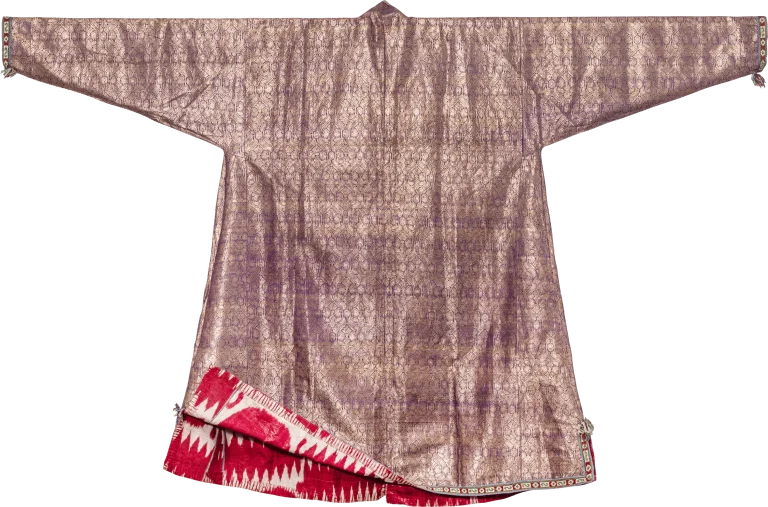
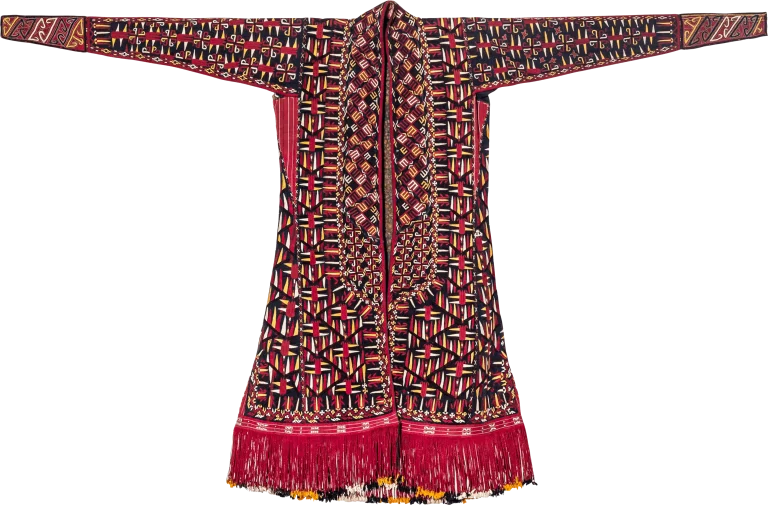
The brocaded king size chapan [No 12] was made for a wealthy merchant and is lined with a red ikat that has been polished by hammering with a wooden mallet and probably egg white. The same technique was used to give brilliance to Indian chintz. The explanation for its size is that a wealthy man would have worn several chapans underneath to demonstrate his importance. The woman’s cloak [No 21] is edged with traditional churpi Turkmen embroidery. A strikingly beautiful female chapan [No 24] in red, yellow and black has motifs clearly inspired by jewellery pendants.
In the way that Central Asian ikats employ abstract designs and inventive uses of form and colour, they recall paintings by artists such as Matisse. They also have inspired many contemporary textile designers – most notably Oscar de la Renta.