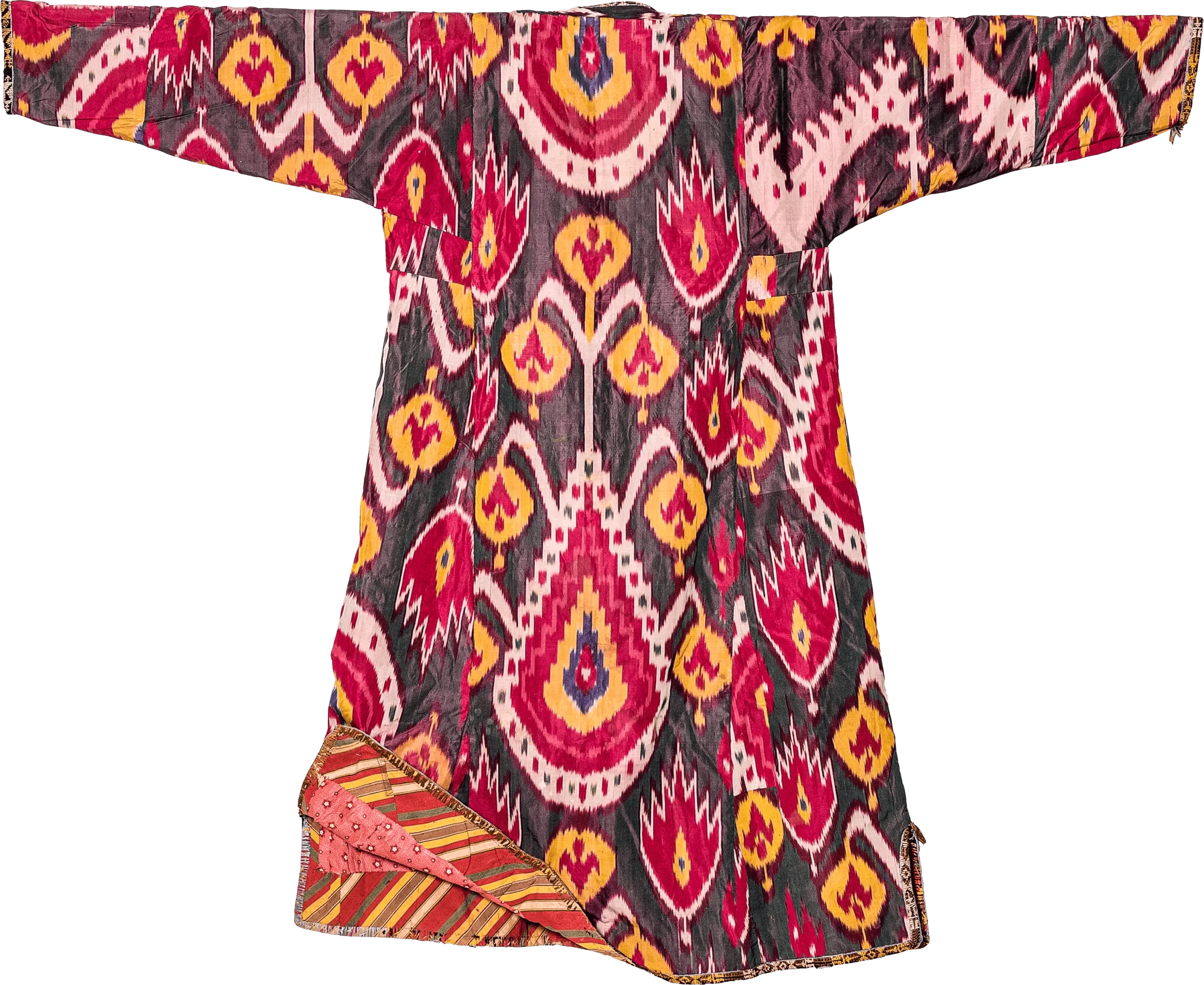
The ground of this bold chapan is in a dark green or a blue grey. Which is not totally clear. The dyeing techniques would be very different. Green was one of the most difficult colours to achieve with natural dyes. It required first dyeing in indigo and then overdying each thread with yellow probably from pomegranate rind. This required two separate dye baths which was complex, time consuming and expensive. Blue grey could be achieved with carefully controlled indigo dyeing and the use of various mordants to fix the colour and determine the tone.
The drama of this robe certainly made for a man and in the mid/end 19th century lies in the boldness of the forms and the intensity of the colours – red, yellow and white contrasting with the green or charcoal blue of the ground. A central medallion or large pendant dominates the central axis as seen from the back. Other medallions suggest both floral forms (perhaps pomegranates or tulips viewed from above) and protective amulet designs.
