
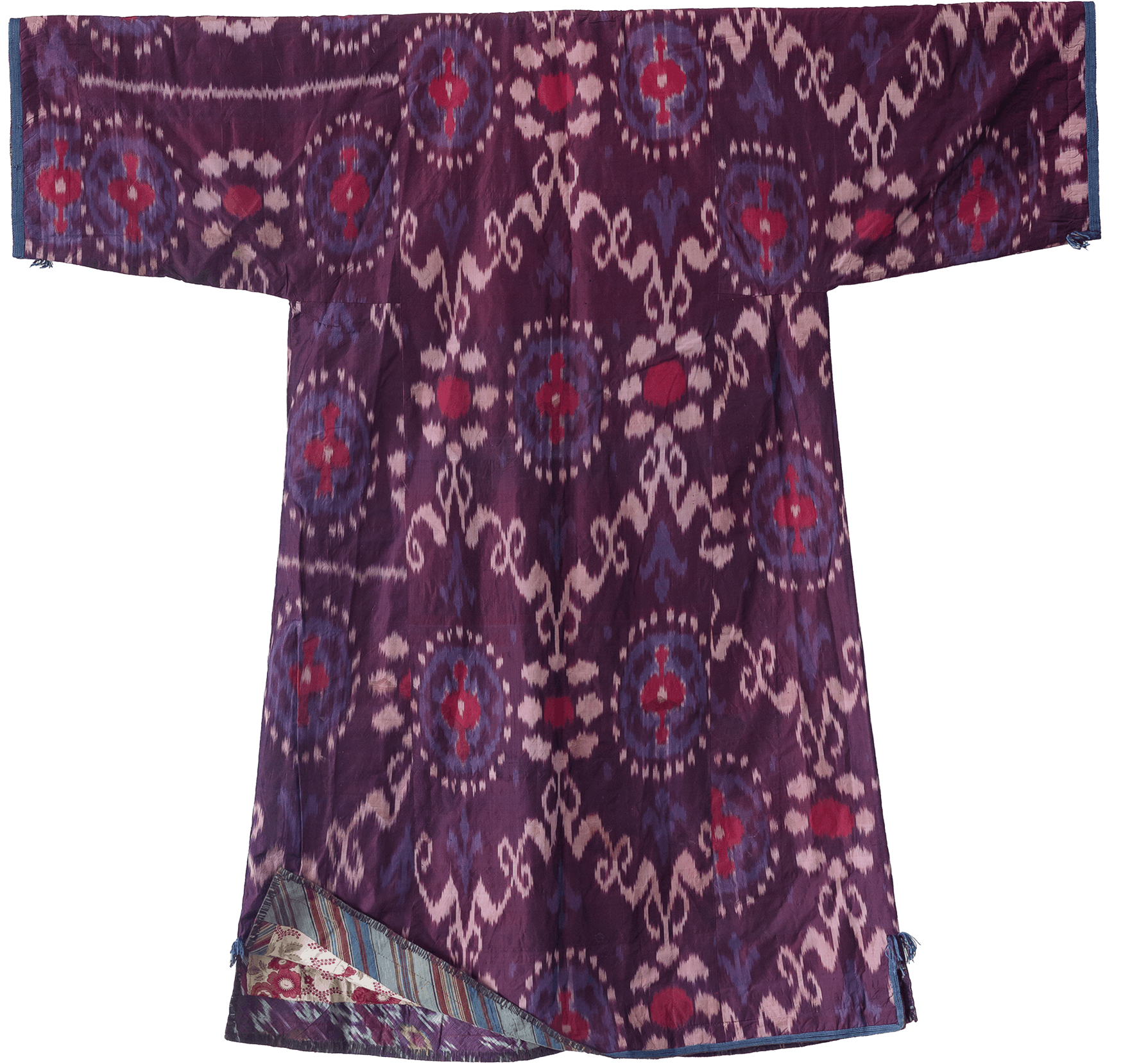
The bold design of this chapan is based on large scale medallion repeats encircled by scrolling arabesques set on a aubergine purple ground. Both the monumental spacing of the pattern and the purple ground are more characteristic of ikats from Bukhara rather than the Ferghana Valley. The medallions in blue with crimson flower centres derive ultimately from much earlier Timurid decorative vocabulary. The arabesques encasing them draw on draw on scrolling ram’s horn and cloud-band designs. There is a bilateral symmetry in the pattern which is technically demanding to achieve in ikat. The chapan probably dates from the 1870s -1880s. This was the period when aniline dyes were introduced into Uzbekistan. The deep aubergine/purple ground and the crimson red could be either natural dyes or aniline. The blue is indigo. But whether the ground is a natural dye or aniline achieving a true, rich aubergine colour evenly across the warp is technically challenging and associated with higher-quality production. The lining is a printed Russian cotton of the period