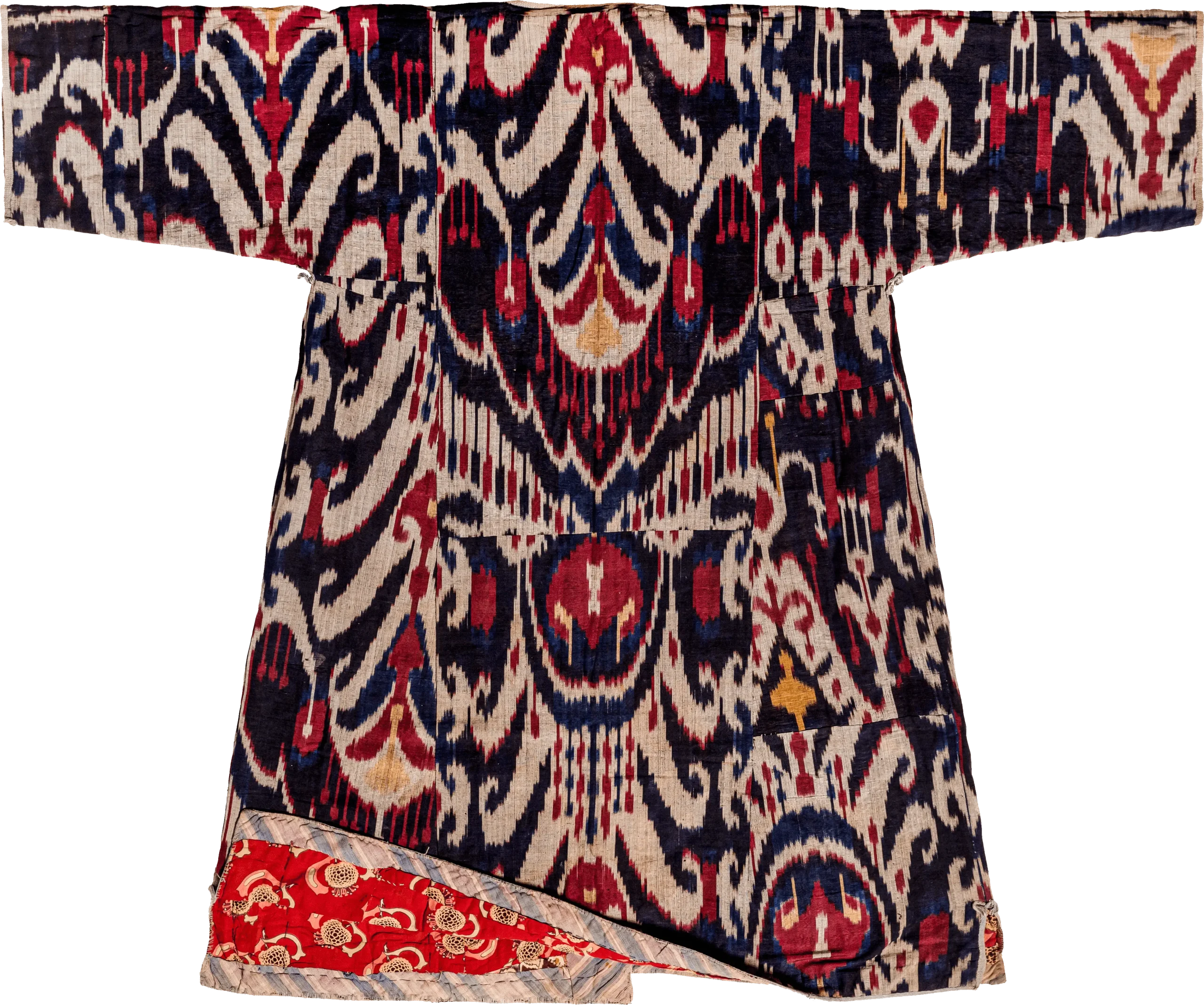
This is a particularly striking chapan with a dramatic colour palette dominated by deep indigo blue. It most likely comes from Bukhara or possibly Samarkand, dating to the mid-to-late 19th century. The sophisticated ikat technique, deep indigo base, and complex geometric-floral motifs are hallmarks of these major weaving centres. The ikat pattern features bold, symmetrical compositions with large chevron or flame-like motifs pointing downward from the shoulders. The central medallions could represent jewellery pendants, pomegranates, or stylized floral forms. Characteristic “comb” or “ladder” vertical elements suggest rain, fertility, or protective talismans. Both the size and colour suggest this was a man’s chapan. Deep indigo was particularly associated with male dignity, scholarship, and religious authority in Islamic Central Asia. The depth of colour indicated quality and repeated dye baths, showing the owner’s affluence. Dark blue/indigo was believed to ward off the evil eye (nazar) across Central Asian cultures
This is a particularly striking chapan with a dramatic color palette dominated by deep indigo blue.
