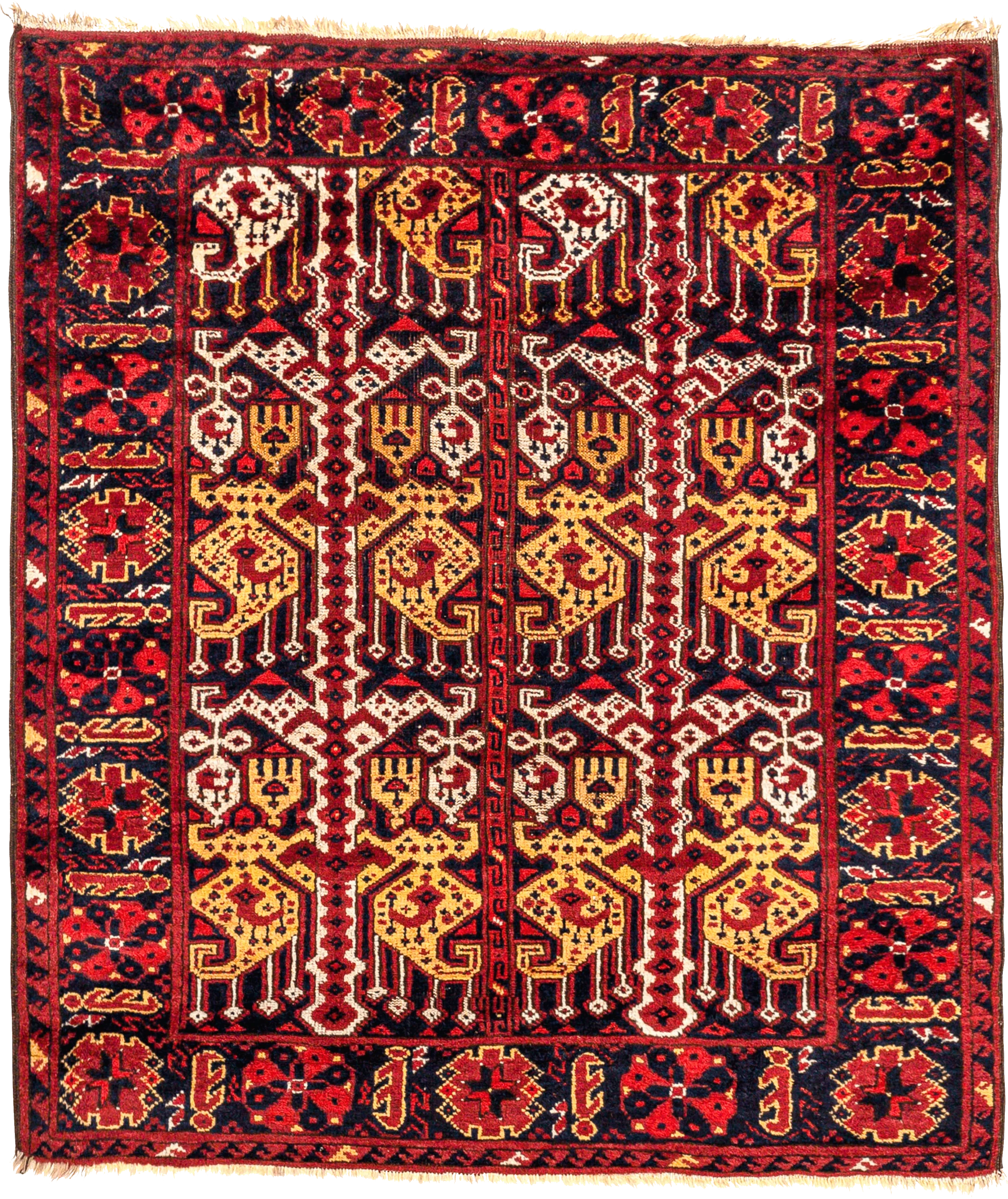
The design of this small Beshir rug is clearly influenced by the silk ikats made in nearby Bukhara. The Turkmen weavers of Beshir would have had significant exposure to the luxury ikats worn by the wealthy in Bukhara and viewed by them as status symbols. What’s particularly clever about the rug is how the weaver has translated a textile technique (resist-dyed silk ikat) into a completely different medium (knotted pile carpet) while maintaining the essential aesthetic character. A dark burgundy coloured field is divided by a central axis. On either side of the centre highly stylised, elongated motifs are arranged in a mirror-image pattern. The use of a mirror-image is characteristic of ikat design. The motifs could have been derived from jewellry pendants or anthropomorphic forms. The rug illustrates what makes Beshir weaving so distinctive among Turkmen groups. They were willing and able to absorb and reinterpret diverse artistic influences. Where purely nomadic Turkmen tribes maintained strict adherence to traditional gol patterns, the Beshir weavers, with their settled lifestyle and proximity to Bukhara, created a unique synthesis of diverse cultures.
