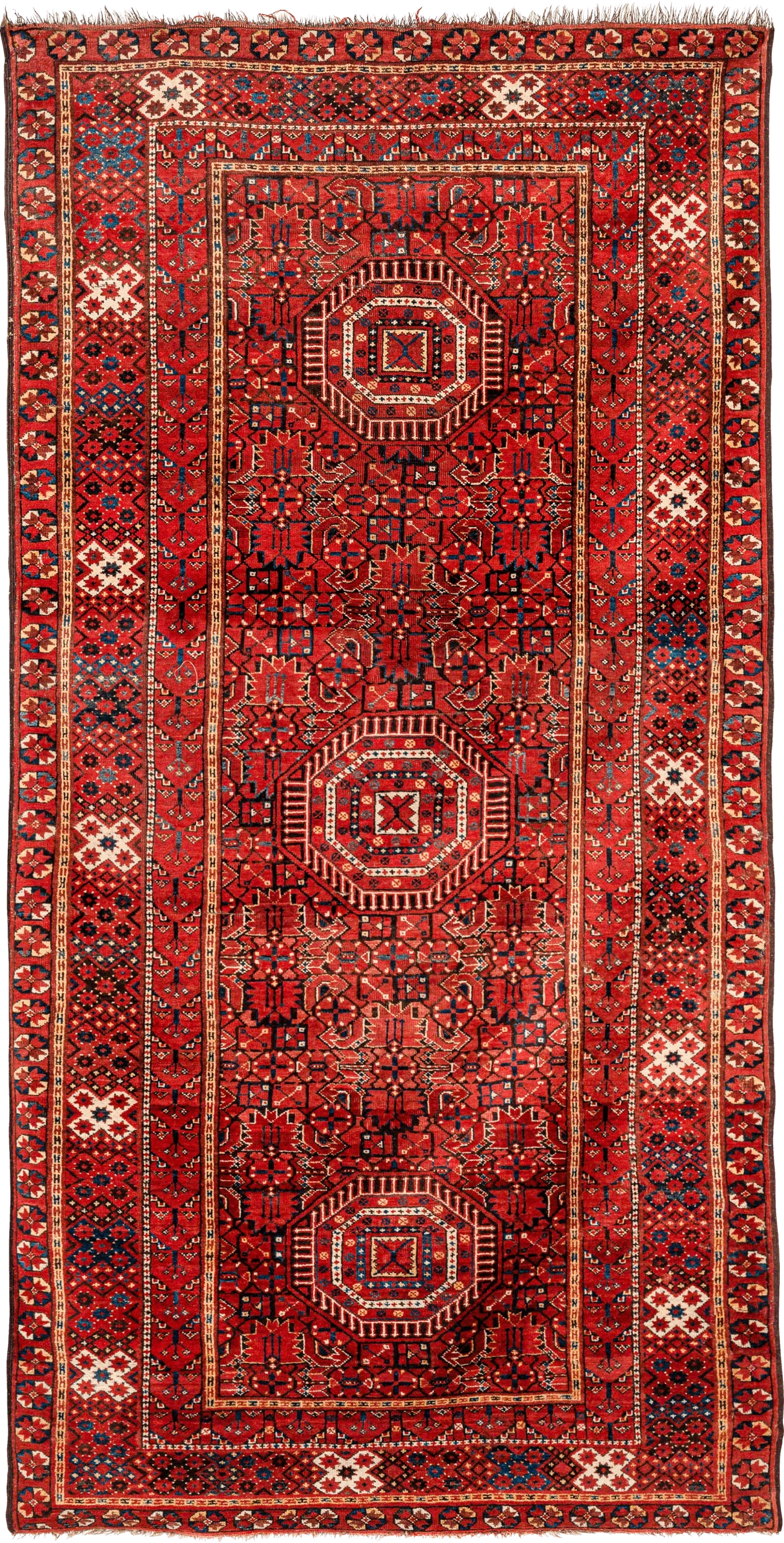
This beautiful Beshir from the central Amu Darya (Oxus) region is characteristic of the diverse cultural influences that were absorbed by Ersari weavers of this area. The ground colours of burgundy red (madder), ivory and deep blue (indigo) are typical of the Turkmen colour palette. But instead of the rows of gols that are part of the Turkmen tradition, the field is dominated by three medallions that could be hauz (water tanks) in the Persian garden tradition or crenelated fortresses. The border patterns seem to draw on Caucasian motifs of diagonals, crosses and stars. The diversity of influences reflect the location of Beshir ( or more likely Bordalyk where they were probably woven) close to the Oxus and thus the Silk Route. Settled Ersari weavers in this area were exposed to a multitude of cultures – Persian, Turkish and cinese. The small motifs that fill the central ground are also part of the Turkmen iconography of stylized flowers, fertility and protective symbols. The rug probably dates from the 1850’s – 1880s.
